
 Final Fantasy XIV
Final Fantasy XIV: a remarkable RPG whose MMO waits behind the story
Eorzea offers one of online gaming’s most generous trials and most beloved long-form stories, but its deliberate campaign can postpone the freedom some MMO players expect.
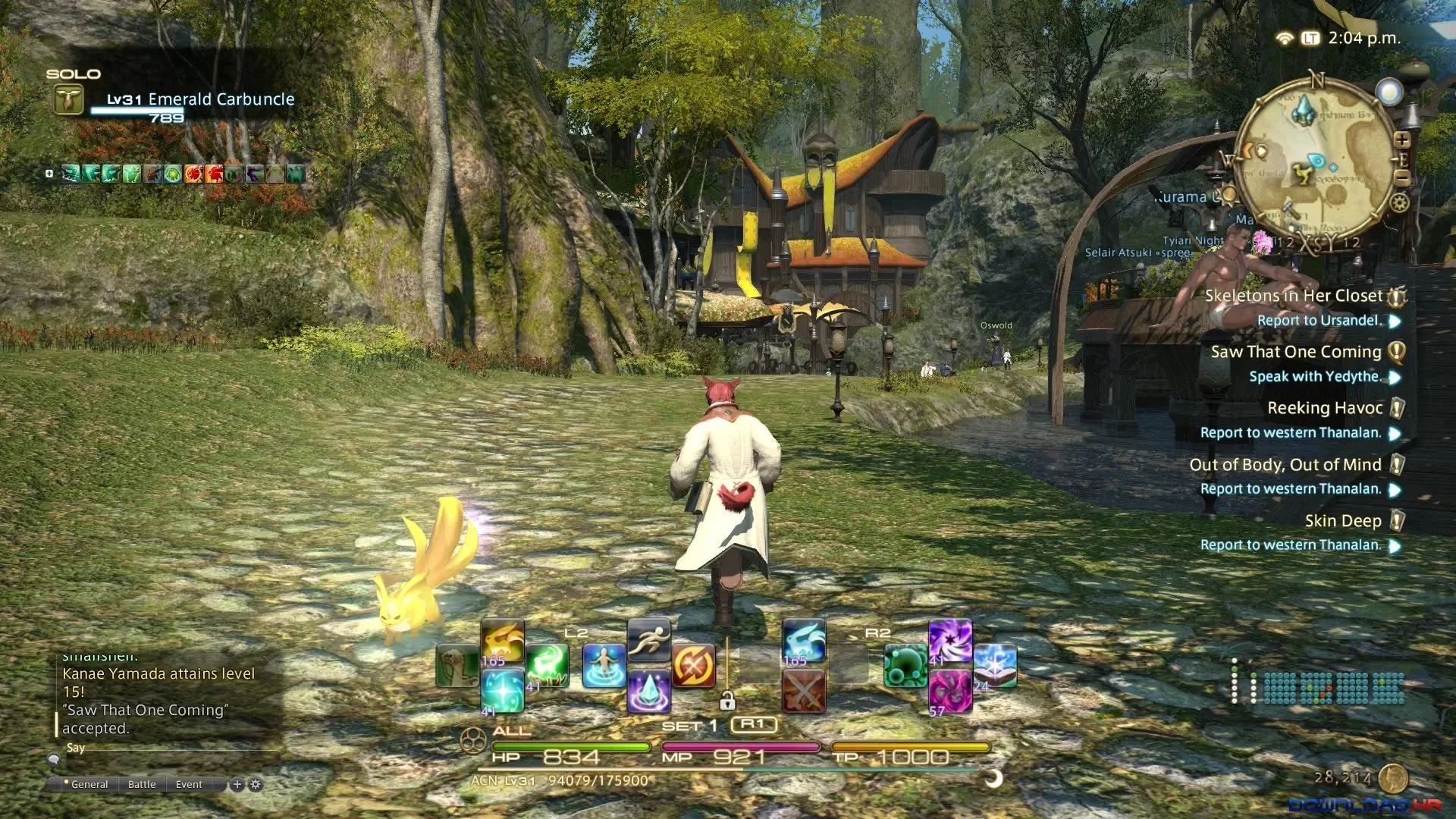
The main scenario is the spine, not a side activity
Final Fantasy XIV asks players to approach it as a numbered Final Fantasy game that happens to contain an MMO. The Main Scenario Quest controls access to regions, dungeons, trials and expansion stories, so narrative progression cannot be treated as optional flavor. This creates exceptional continuity: recurring characters change over years, old political conflicts matter later and major battles arrive with genuine dramatic preparation.
It also creates the game’s most important compatibility test. Players who enjoy reading dialogue, watching cutscenes and following a large ensemble can develop a rare attachment to Eorzea. Players who primarily want open-ended grinding or immediate access to friends at endgame may experience hundreds of quests as a gate. XIV does not hide that priority; it builds nearly everything around it.
One character can become an entire roster
A single character can unlock and level every combat job, crafter and gatherer. That removes the usual conflict between maintaining a social identity and experimenting with new roles. Switching weapons changes jobs, while shared systems preserve travel, story and collection progress. For players who dislike repeating introductory campaigns on alts, this is one of XIV’s most liberating decisions.
The job system values readable party responsibilities over sprawling buildcraft. Rotations become intricate at higher levels, but two players on the same job generally bring the same toolkit. That makes group expectations easier to understand and encounters easier to tune. It also means players who want highly personal talent builds may find customization concentrated in cosmetics and job choice rather than mechanical invention.
Its social world extends far beyond raids
XIV supports a broad culture of glamour collecting, housing, crafting, gathering, treasure maps, roleplay, player events and casual matchmaking. Duty support allows much of the required dungeon story to be completed with non-player allies, reducing anxiety without removing the wider community. The result is an MMO where a person can remain socially connected even when high-end combat is not the center of their week.
Housing scarcity and server selection complicate that picture. Owning a particular plot is not equally accessible, and moving between data centers or joining friends can involve rules that are not obvious to a newcomer. The community’s reputation for friendliness is deserved in many routine activities, but no population is universally welcoming. Finding a compatible Free Company remains more valuable than assuming the game’s culture will do all the work.
The free trial is enormous but structurally separate
With Patch 7.5, Square Enix expanded the official free trial through Shadowbringers and level 80. That is an extraordinary amount of story and group content without a time limit. Trial accounts have social and economic restrictions, and once an account is converted to the paid game it cannot return to trial status. Dawntrail and later content require the commercial game, with a subscription required to continue playing.
The sensible approach is to stay on the trial until its restrictions interfere with how you want to play, not until every available quest is exhausted. Someone playing with an established guild may value paid social features early. A solo story player can spend months before subscribing. The trial is generous, but it should be treated as a version of the service with boundaries, not a temporary weekend demo.
MMOFinder verdict
Final Fantasy XIV succeeds because its systems reinforce a coherent identity: a guided epic, a flexible character and a community with room for both demanding raids and low-pressure hobbies. The long campaign gives later victories unusual emotional weight. Its orderly jobs and encounter language make group play understandable without making the hardest content trivial.
Choose XIV if you want to live through a story with other people nearby and enjoy building one persistent character across many disciplines. Avoid forcing yourself through it because someone promised the game becomes good hundreds of hours later. The journey is the product. If that journey resonates, Eorzea can become one of the genre’s most durable homes.