
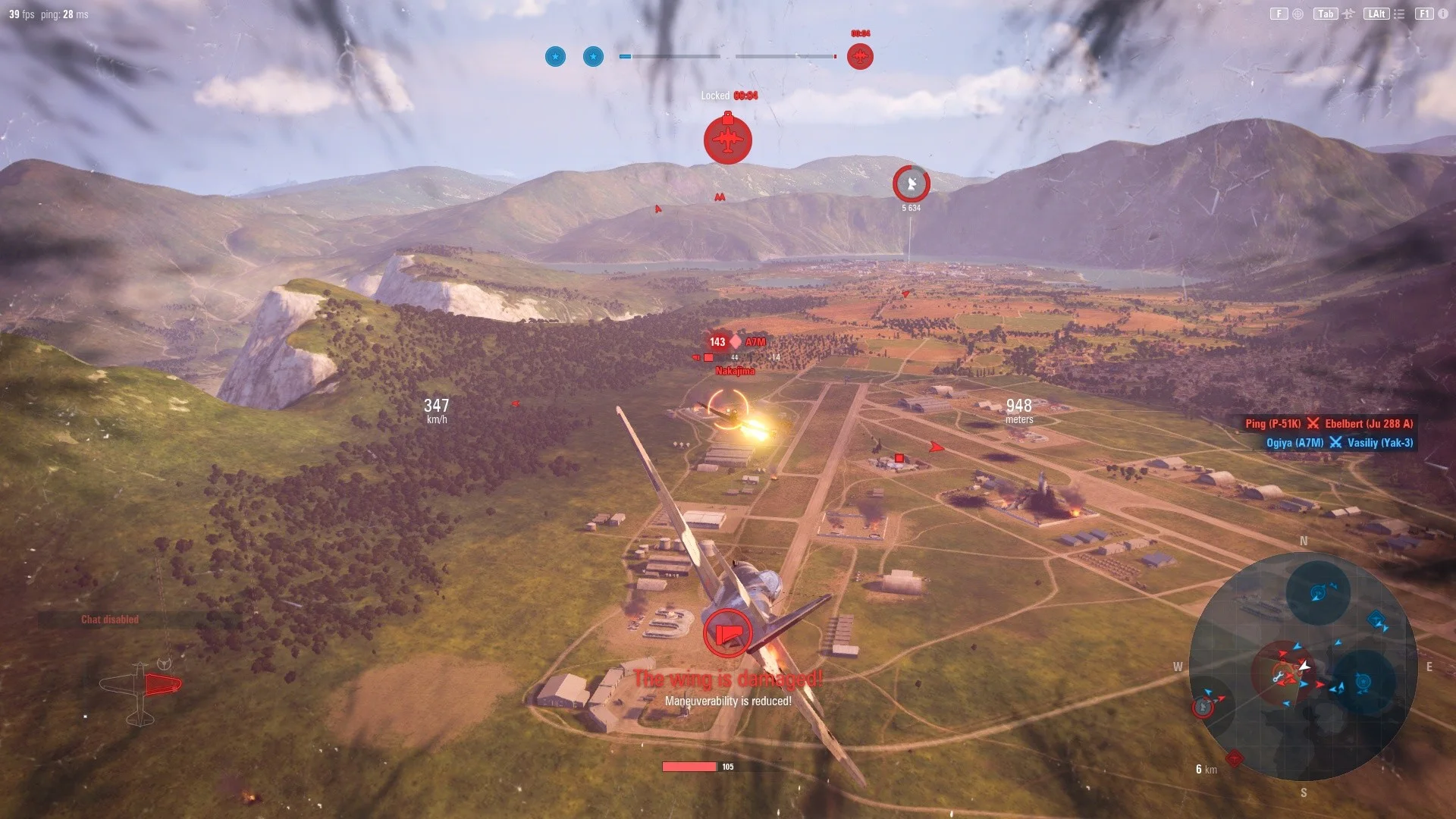
 World of Warplanes
World of Warplanes Turns Altitude Into a Team Resource
Five aircraft classes, energy fighting, ground objectives, sector capture, respawns, and modular upgrades make control of the sky more important than one perfect dogfight.
The sky has lanes even without roads
Speed, altitude, climb, turning ability, and weapon range create invisible routes through a battle. A fighter near its ideal height has options; the same aircraft caught slow and low may have none.
Pilots learn to treat energy as stored possibility. Diving converts altitude into speed, climbing spends speed for position, and a bad turn can donate both advantages to an opponent.
Five classes divide attention
Fighters contest enemy aircraft, heavy fighters exploit speed and firepower, multiroles shift between targets, attack aircraft pressure ground positions, and bombers damage infrastructure from altitude.
These roles make team composition visible across a huge space. Chasing one evasive opponent may be less useful than protecting a bomber or stopping ground attack that is quietly deciding a sector.
Conquest makes territory the real scoreboard
Capturing and holding key areas forces pilots to choose priorities beyond personal kills. Different sectors provide defenses and strategic value, so the battle can turn when a coordinated group attacks the right objective.
Respawns preserve momentum and allow adaptation. A lost aircraft is a setback rather than a long spectator sentence, keeping players involved in a match whose control map can still change.
Upgrades personalize history without becoming simulation
Engines, airframes, guns, bombs, rockets, equipment, and crew development let iconic aircraft evolve toward a preferred role. Historical silhouettes remain recognizable even as the systems favor accessible competitive balance over strict realism.
That compromise defines the audience. Simulation pilots may want deeper procedure and physics. Players who want to understand aviation tactics through immediate team battles can find altitude, energy, and role surprisingly expressive.