
 Trove
TroveTrove: a bright loot chase where building and class collecting share the same world
Trove combines rapid dungeons, voxel creativity and a wide class roster into an easygoing MMO loop, then stretches that loop with a surprisingly dense endgame grind.
The first promise is immediate play
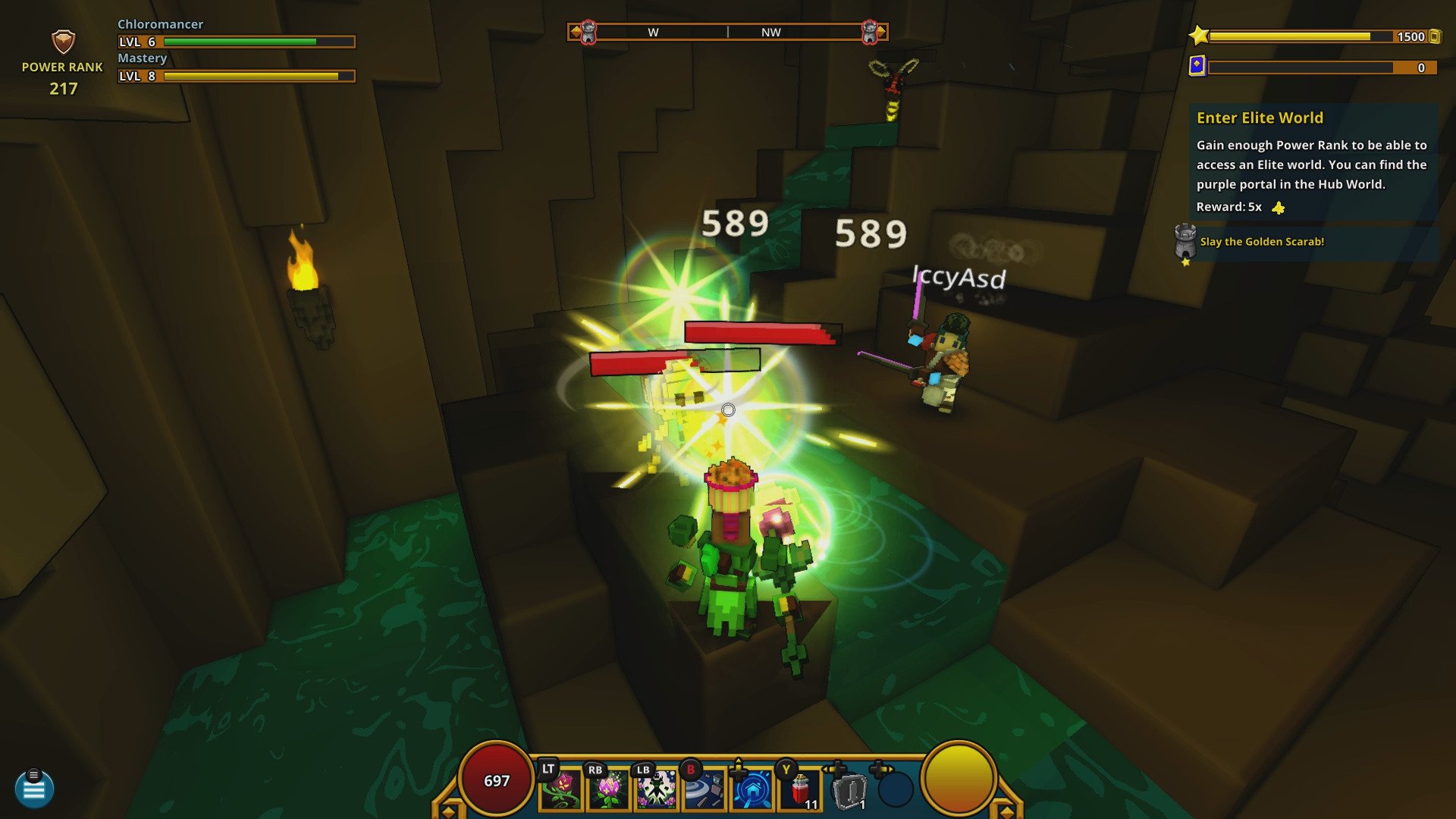
Trove wastes little time establishing its loop. Enter a colorful realm, follow the landscape toward a dungeon, defeat its inhabitants and open a reward chest. Movement is brisk, objectives are readable and the voxel world makes destruction and construction feel natural rather than decorative.
That immediacy is valuable for short sessions and mixed-experience groups. Players can accomplish something without studying a long quest chain. The tradeoff is repetition: the same clarity that makes dungeons approachable can make their structure predictable once the reward loop is familiar.
Classes are toys worth collecting
A broad roster offers different movement, damage and utility styles, from straightforward weapon users to stranger magical and summoning concepts. Switching interests does not require abandoning the wider account, so unlocking and improving classes becomes a major source of variety.
The roster encourages experimentation, but serious optimization adds gear, gems and class-specific priorities. A casual player can enjoy the identity of a class quickly; a competitive player must learn a much denser progression layer. The gap between those experiences explains why Trove can feel simple and complicated at the same time.
Building gives loot a place to breathe
Cornerstones provide portable personal spaces, while Club Worlds let groups construct shared environments block by block. Building interrupts the combat loop with creativity and gives collected materials another meaning. A club can become a community artifact rather than only a roster.
Creation works best when players set their own goals. The game supplies tools, space and a social frame, not a universal reason to build. Players who enjoy making, decorating and showing work can find a second game inside Trove; players interested only in power may barely touch it.
Collection is the real map of progress
Mounts, styles, allies, recipes and other unlocks turn the account into a record of discovery. Many rewards contribute to visible identity, and the absurdity of a favorite mount or costume fits the game’s tone. Progress can therefore continue even when equipment changes are small.
Collection also expands the checklist. Limited events, rare materials and many parallel goals can create pressure to optimize time. Trove is most enjoyable when the player chooses a few collections that feel personal instead of treating every empty slot as an obligation.
The endgame is denser than the art suggests
Higher power involves equipment quality, gems, upgrades, crafting and activity-specific resources. These systems give committed players a long horizon and reasons to revisit many realms. They also introduce time gates and material demands that contrast with the relaxed first impression.
Before spending, decide whether the desired goal is creative, social or competitive. A builder and a leaderboard-focused player interact with the economy differently. The free entry point is generous for testing classes and movement, but it does not reveal the full cost of maximizing a character.
MMOFinder verdict
Trove succeeds when its three loops support one another: action earns resources, collection supplies identity and building turns the world into a canvas. Few MMOs make those activities coexist with such little ceremony.
The recommendation weakens only when optimization replaces play. Sample several classes, join a club and build something before deciding how seriously to chase power. The game’s best quality is freedom to bounce between goals; preserve that freedom from the checklist.