
 Star Citizen
Star Citizen Turns Every Routine Into a Physical Journey
Ships, cargo, distance, and preparation feel like tangible parts of an ordinary life among the stars—not abstractions between missions.
A ship is a place before it is a statistic
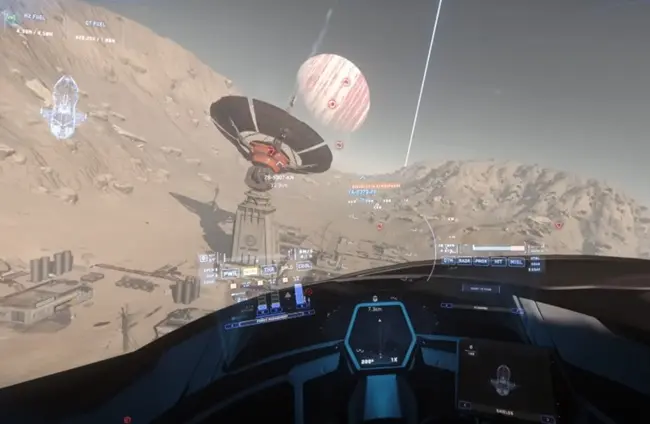
Star Citizen asks players to walk to a hangar, board through a real entrance, sit in a cockpit, start systems, and leave atmosphere instead of treating travel as a loading-screen abstraction. A ship therefore feels less like an equipped item and more like a movable room with doors, storage, blind spots, and responsibilities.
That physicality gives scale emotional force. A small craft can feel intimate and understandable, while a multicrew vessel becomes a workplace that asks people to divide attention across piloting, engineering, weapons, cargo, and navigation. Size changes the social problem, not just the number beside a hull.
Professions turn preparation into play
Mining, salvage, hauling, medical response, bounty hunting, and exploration are strongest when the equipment and risks differ enough to create distinct routines. Choosing a vehicle, loading supplies, plotting a route, and deciding when to return are part of the profession rather than chores placed before it.
The same commitment can exhaust players who want immediate action. A failed trip may cost far more time than the encounter that ended it. Star Citizen works best for someone who enjoys the departure, transit, and recovery as much as the final contract.
Unscripted cooperation creates the best stories
The persistent universe is most persuasive when plans break. A damaged ship needs rescue, valuable cargo attracts danger, or a simple bunker mission becomes a medical extraction. Because players occupy the same physical systems, assistance can be practical rather than ceremonial.
Organizations amplify that possibility by coordinating people with different ships and specialties. The game does not need to manufacture a heroic cutscene when a crew has already improvised one through navigation, logistics, and a badly timed equipment failure.
Development remains part of the experience
The playable universe is still an evolving alpha, and that fact reaches into every session. Features change, performance varies, progress may be reset, and bugs can undo careful preparation. Buying access is participation in an unfinished project, not the purchase of a settled MMO.
For tolerant players, the instability sits beside a kind of simulation no other online world attempts at the same scale. For everyone else, the distance between the current build and the finished promise is the most important fact to understand before boarding.