
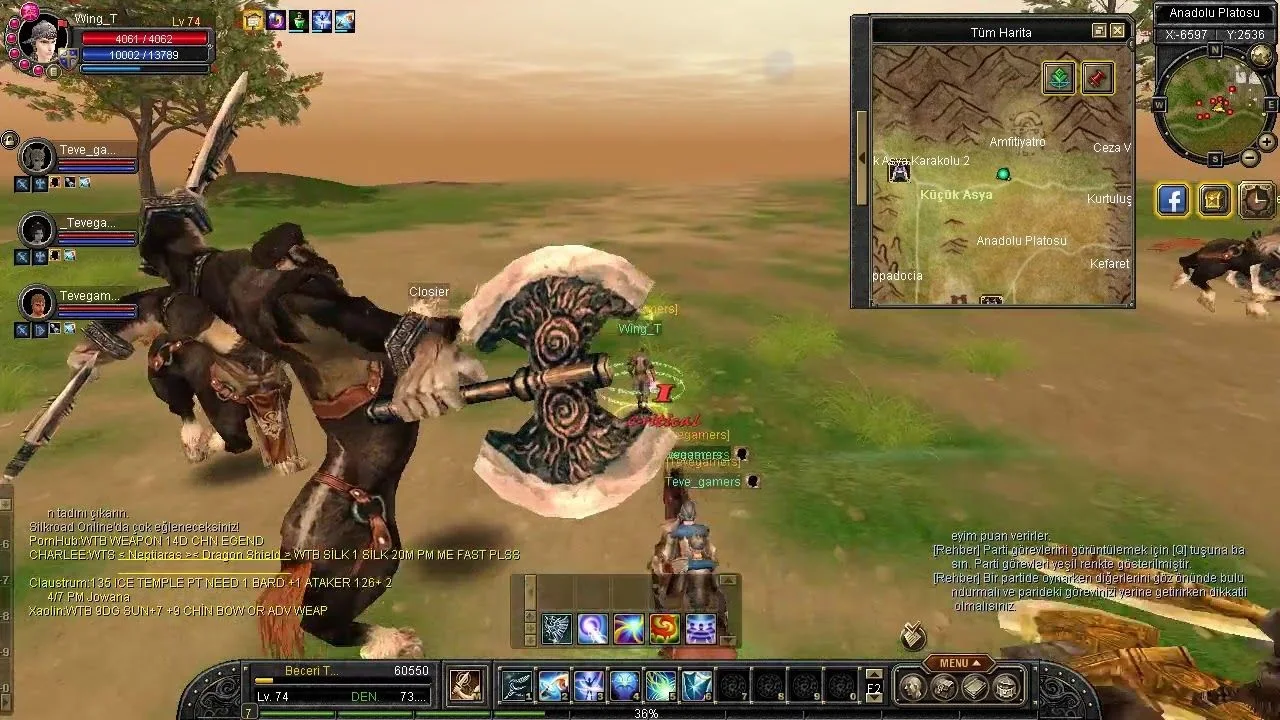
 Silkroad Online
Silkroad Online Makes Trade Routes Feel Dangerous Again
Silkroad Online's trader, hunter, and thief triangle transforms movement between cities into a social contest over risk, protection, and profit.
A road becomes content when something is at stake
Most MMORPG roads are empty time between destinations. Silkroad Online gives travel an economic purpose. A trader carries goods for profit, a hunter protects the route, and a thief tries to seize the opportunity. The same stretch of terrain can therefore produce preparation, negotiation, ambush, and pursuit.
The system succeeds because each role requires the others. Profit attracts danger; danger creates demand for protection; protection gives thieves opposition worth outsmarting. The resulting encounter is not a sealed match but a story generated by players sharing an uncertain route.
The job triangle creates readable motives
Open-world PvP can feel arbitrary when attackers and defenders have no reason beyond convenience. Silkroad's job identities make intent visible. A caravan announces value, its escort announces resistance, and an approaching thief announces a threat. Players can understand the scene before the first attack lands.
That readability does not guarantee fairness. Numbers, equipment, timing, and local population can overwhelm an individual run. The appeal lies in managing exposure: choosing cargo, recruiting protection, learning routes, and accepting that the possibility of loss is what makes arrival satisfying.
Two character traditions broaden the build game
Chinese and European character systems offer different approaches to skills, roles, and party structure. This division gives the world more than a visual east-west theme; it creates distinct progression languages for players to study. Building a capable character becomes a long planning project.
The freedom is paired with old-school cost. Advancement is slow, optimization knowledge matters, and a poorly understood choice can waste substantial effort. New players benefit enormously from current community guidance before committing resources, especially if their goal is competitive job play rather than casual exploration.
Its best idea survives its roughest realities
Silkroad Online carries the baggage of a long-running free-to-play game: steep grind, uneven competition, and a history in which automated play has complicated the social landscape. Those are not minor footnotes. They directly affect whether the job system can deliver its intended human drama.
Yet the core idea remains potent. Few MMORPGs make transporting goods across a map feel like a multiplayer vocation with natural allies and predators. For players fascinated by that triangle, Silkroad is worth understanding even when its surrounding progression demands more patience than they wish to give.