
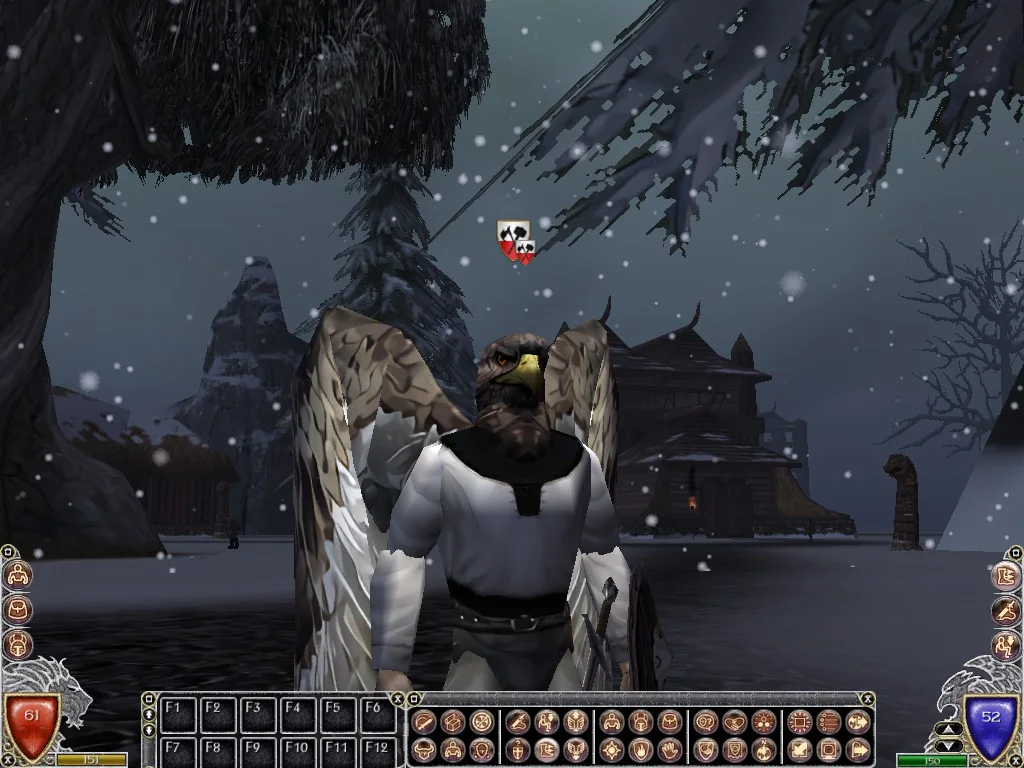
 Shadowbane: Resurgence
Shadowbane: Resurgence Makes the Political Map Destructible Again
Twelve races, deep class branching, unrestricted world PvP, player fortresses, kingdoms, sieges, resource control, and full-loot danger restore a famously severe political sandbox.
Character creation begins political possibility
Races influence attributes and class compatibility, while core and advanced paths create a wide network of combat, support, scouting, and specialist roles. A build is tied to what a guild needs as much as what wins a duel.
The freedom rewards planning and punishes casual assumptions. Race restrictions, attribute thresholds, disciplines, and group composition make outside study nearly unavoidable for anyone who wants a durable character.
A fortress is a claim others can answer
Guilds build strongholds and kingdoms in a world where rival players can challenge what has been constructed. A city is economy, respawn access, identity, and military position rather than protected scenery.
Destruction makes construction meaningful, but it also concentrates power. Smaller groups need diplomacy, alliances, or mobility because a sandbox that permits kingdoms also permits them to dominate.
Open PvP turns travel into intelligence
Most of the map permits conflict and defeated players may lose loot. Scouts, routes, local knowledge, and information about enemy movement therefore matter before formal siege warfare begins.
The danger creates unforgettable campaigns and an inhospitable onboarding experience. Players who require consensual encounters should treat unrestricted PvP as the governing rule, not an optional activity.
Resurgence carries both a legacy and a burden
The return preserves Shadowbane’s defining systems while updating infrastructure and compatibility. It aims to make a historic political MMO playable without sanding away the brutality that gave it identity.
Success depends on population, technical stability, and trust in the service. The design can provide stories no theme park can manufacture, but only when enough communities accept that their greatest project may be burned down.