
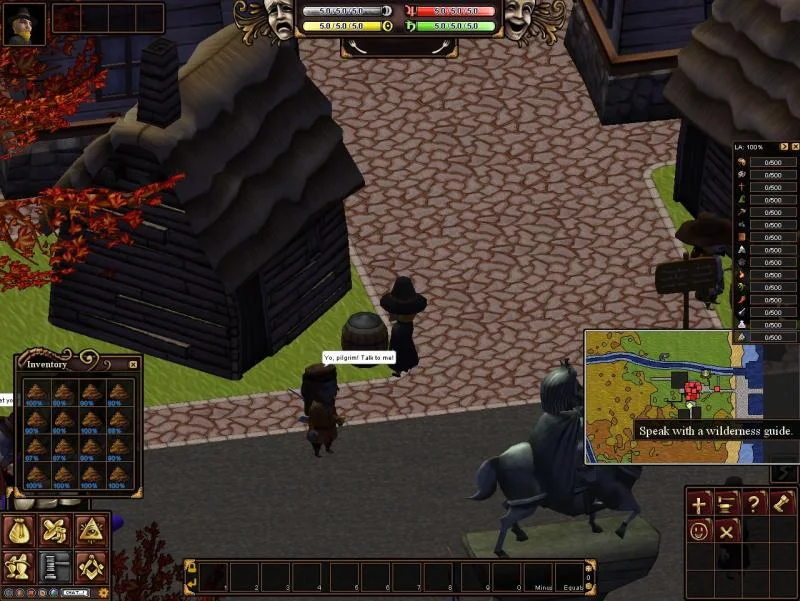
 Salem
SalemSalem Makes Every Homestead an Argument Against the Wilderness
Permadeath, inherited progress, classless skills, deep crafting, settlements, trade, crime, and colonial folklore give ordinary labor genuine danger.
Safety is something players construct
Salem begins with wilderness rather than guaranteed private protection. Gathering, farming, crafting, building, and claiming land gradually turn an exposed location into a working settlement.
A fence, stockpile, field, or trade connection matters because the world can threaten it. Ownership gains emotional weight when security is the result of knowledge and preparation rather than an invulnerable housing instance.
Learning replaces a fixed class
Character development has no mandatory warrior, crafter, or healer track. Players pursue the skills and proficiencies that support the life they want, whether that means farming, exploration, industry, trade, defense, or predation.
Freedom makes mistakes possible. A newcomer can spend time inefficiently or expose valuable work before understanding risk. The community and outside knowledge are therefore part of progression, not optional supplements.
Permadeath turns danger into memory
Death can end a character, giving wildlife, strangers, and poor preparation consequences far beyond a repair fee. Inheritance allows a player to begin again with advantages, so loss becomes a generational setback rather than total account erasure.
The system produces stories because survival cannot be assumed. It can also magnify griefing and anxiety. Anyone who needs their accumulated character to remain permanently safe should treat permadeath as the defining rule, not a minor feature.
Folklore makes the frontier stranger
Colonial New England supplies farms, tools, settlements, and trade, but the wilderness gradually reveals creatures and witchcraft drawn from darker folklore. Familiar survival labor sits beside an increasingly uncanny world.
That contrast gives Salem an identity separate from generic medieval crafting sandboxes. Its rough presentation and community-driven conflict require patience, yet the same roughness leaves room for a settlement to feel genuinely authored.