
 Reign of Guilds
Reign of Guilds Turns a Castle Into an Economic Office
First-person non-target combat, friendly fire, open PvP, karma, unbound loot, deep crafting, castles, taxes, caravans, counts, and a player king make guild victory administrative.
Combat demands spatial discipline
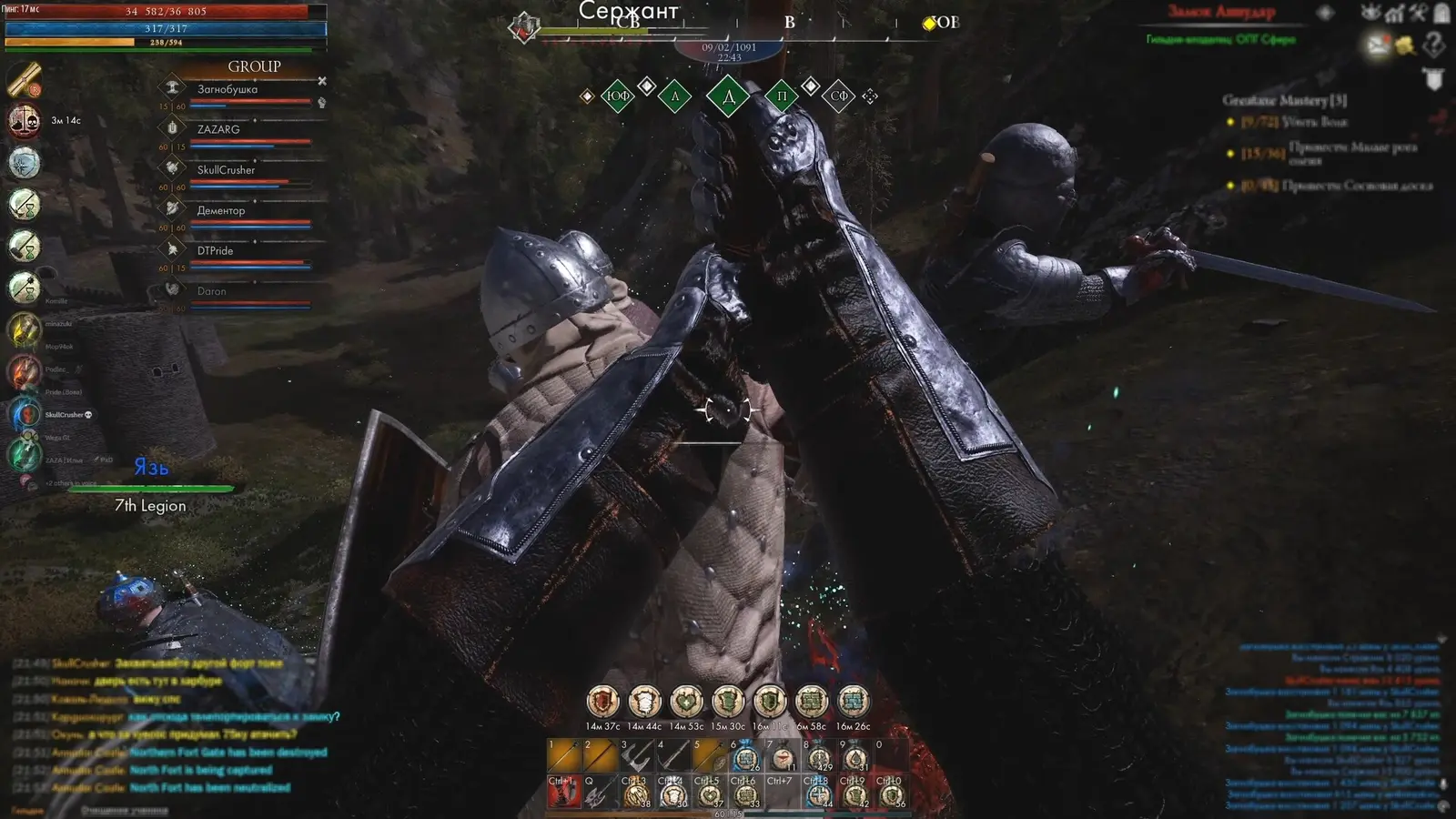
Reign of Guilds uses first-person, non-target combat with friendly fire. Movement, aim, formation, and awareness matter because an undisciplined ally can be another hazard in a crowded fight.
Flexible buffs let players emphasize mobility, vitality, or damage, but no individual build removes the need for coordinated positioning. Large battles test whether a guild can behave like a unit.
Danger changes across the map
Green, Yellow, Black, and Red areas communicate different PvP and death consequences. Karma can increase losses for aggression, while the most contested resource regions normalize conflict and risk.
The gradient creates choices instead of one universal safety rule. Players decide whether better materials justify exposure, and guilds decide when escorting gatherers is worth diverting fighters.
Crafting gives conquest something to govern
Gathering, refining, recipes, tools, stations, blacksmithing, weaponsmithing, and enchanting create quality differences that matter to the war effort. Valuable loot remains tradable rather than permanently attached to its finder.
A serious artisan can supply a guild or compete in the market, but production is vulnerable to territorial control and loss. Economic success becomes political because safe access is never purely personal.
Castles create jobs after the siege
Guilds capture castles, control counties, collect taxes, raid caravans, form alliances, and compete for a throne. Victory therefore creates an obligation to manage people and resources rather than only a title screen.
That ambition depends on population and balance. If a few organizations control every route, politics becomes exclusion; if rivalry remains viable, the kingdom can generate a history authored by its players.