
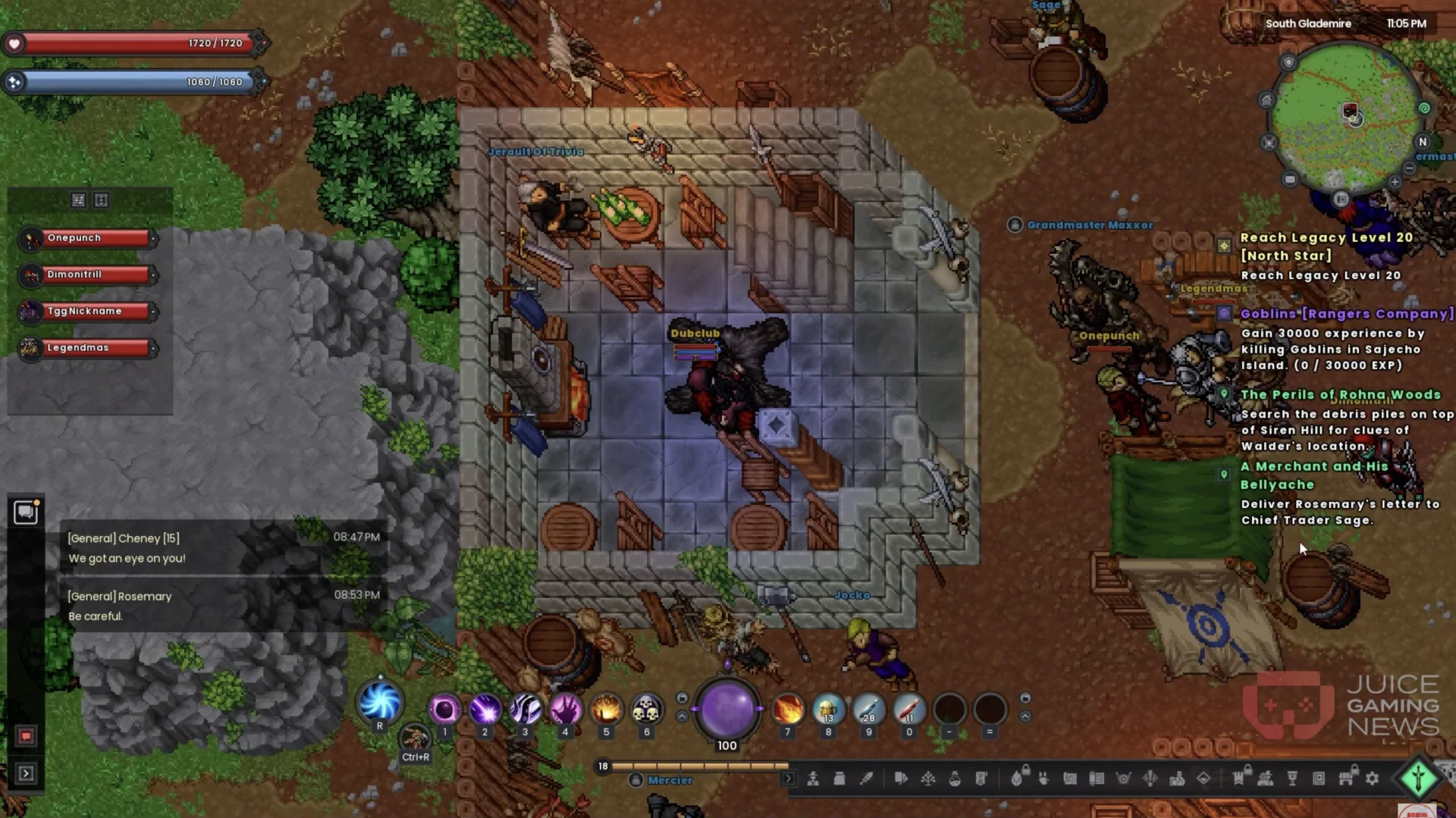
 RavenQuest
RavenQuest Makes Every Journey an Economic Decision
Tradepacks, ships, wagons, land, and flexible archetypes turn travel into a negotiation between profit, danger, and personal ambition.
A build begins with combinations, not a label
RavenQuest lets a character combine three archetypes into a class, creating hybrids that borrow offense, defense, control, or support from different traditions. The system encourages players to think in relationships between abilities rather than accept a single predetermined kit.
That freedom makes experimentation satisfying, but it also raises the cost of understanding a build. Synergy is not obvious from an archetype name, and competitive play inevitably identifies favored combinations. Players who enjoy iteration will see a workshop; players who want immediate certainty may see homework.
Tradepacks give geography a price
Materials can be assembled into tradepacks and delivered to tradeposts whose demand changes with player activity. Profit therefore depends on destination and timing as well as recipe. A road or sea lane becomes economically meaningful because carrying value across it is the activity.
Ships, wagons, and mounts turn transportation into equipment choices. The best route may also expose a trader to inconvenience or attack, giving otherwise ordinary travel a story-shaped risk. An economy feels alive when location changes what an item is worth.
Land connects production to a visible home
Farming, husbandry, crafting, and house rooms let property support a character’s broader plan. A home can improve production or specialization instead of functioning only as decoration. Because the world is open, estates also make player ambition visible in the landscape.
RavenQuest’s land and token structures require careful reading. Some property has blockchain-linked scarcity and benefits, while community land follows different rules. Players should understand the distinction before assuming every housing path carries the same cost, permanence, or economic opportunity.
Freedom works best when no path becomes compulsory
Optional PvP, professions, exploration, arenas, shipping, and guild conflict create several legitimate reasons to log in. The sandbox succeeds when these paths trade with and influence one another without forcing every participant into the same activity.
Its player-driven systems can generate memorable opportunity, but also inequality and optimization pressure. RavenQuest is best approached as a world of connected risks rather than a guided theme park. The player who enjoys reading markets and adapting plans will find the most to own.