
 Pirates of the Burning Sea
Pirates of the Burning Sea Lets the Economy Sail Into Battle
Its finest trick is making ship combat, national conquest, production chains, and open-sea risk feel like parts of the same Caribbean campaign.
A broadside begins long before the cannons fire
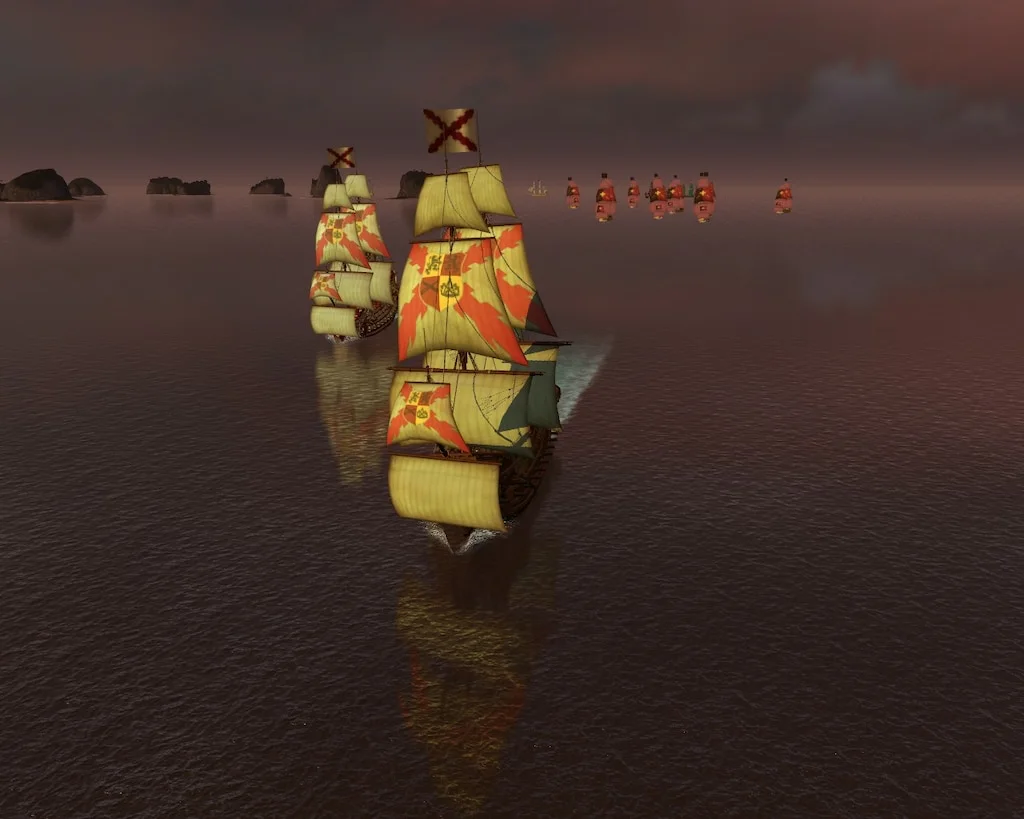
Naval combat rewards an understanding of wind, facing, range, ammunition, sail condition, armor, and crew. The captain is constantly shaping a future firing opportunity rather than simply repeating an attack. A successful broadside feels earned because positioning created it.
Different hulls express different intentions. Speed, turning, cargo space, durability, and gun layout affect whether a ship hunts, escorts, trades, or holds a battle line. Acquiring a vessel is therefore the beginning of a role, not a cosmetic upgrade.
Production gives every loss an economic shadow
The economy is largely player-run, with structures, labor, recipes, regional resources, warehouses, and auction houses connecting raw materials to finished ships and equipment. A destroyed vessel matters because someone assembled the supply chain that made it possible.
This is where commerce meets warfare. Nations need economic capacity to replace losses and sustain pressure, while traders need routes worth protecting. Even a player who avoids direct PvP can influence the strategic health of a faction through production.
Port conquest makes the Caribbean political
British, French, Spanish, and Pirate interests compete across a map where unrest and port battles turn local activity into national conflict. The world gains rhythm from campaigns that involve scouting, hauling, economic preparation, and scheduled confrontation.
The structure creates community memory. Captains recognize reliable opponents, societies coordinate fleets, and a familiar port can become a contested objective. The same sea carries routine trade one evening and organized war the next.
A specialist MMO expects specialist patience
Pirates of the Burning Sea comes from an older design era. Land combat is less convincing than naval action, the interface takes study, and a modest population means community channels matter. New captains should expect to learn from guides and other players.
The reward is a maritime MMO without a modern equivalent. Its ships are not a minigame attached to an avatar adventure; they are the center of an economy and war. For the right captain, that integration still gives every voyage a reason.