
 Perfect World International
Perfect World International Makes the Sky Part of the World
Perfect World International connects free flight, elaborate character creation, guild territory wars, and a vast Chinese-fantasy landscape into a distinctive MMO identity.
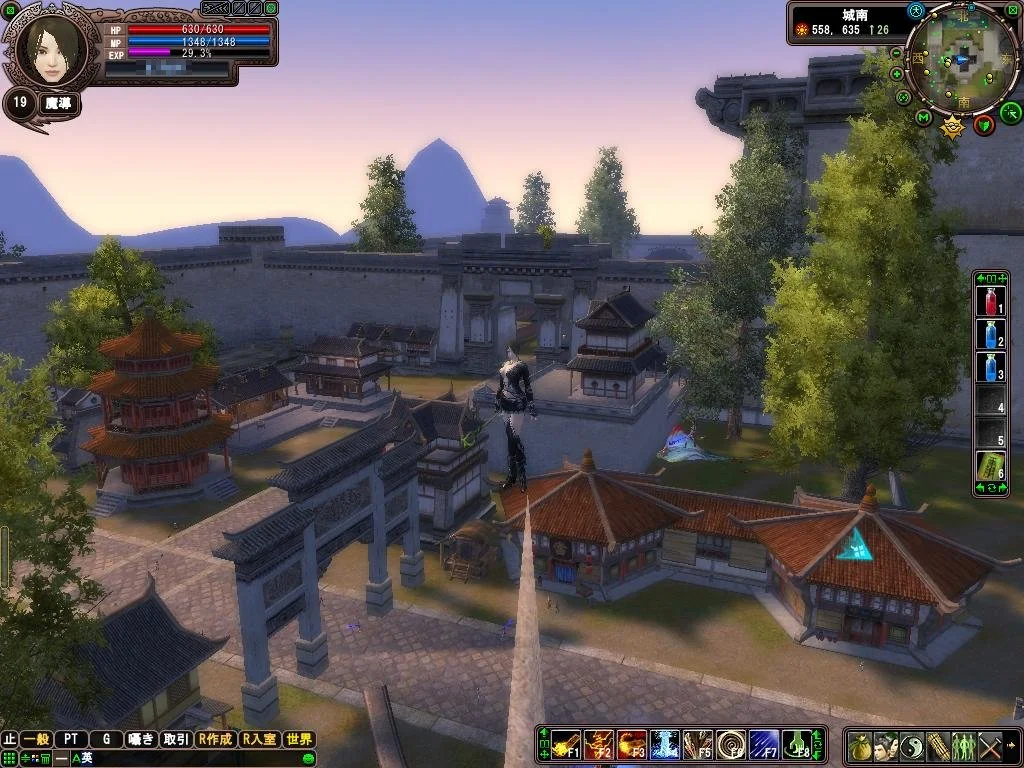
Flight changes how a landscape is understood
Perfect World International's defining freedom is not simply owning a mount with wings. Aerial travel changes the player's relationship to terrain, allowing mountains, rivers, and settlements to be read from above and approached from unusual directions. The sky becomes usable space rather than a painted boundary.
That freedom creates scale. Distant landmarks remain part of one navigable world, and a route can be chosen for view or efficiency rather than dictated by roads. Even when later progression becomes routine, lifting away from the ground preserves a small sense of possibility.
Character creation supports a world of recognizable people
Detailed appearance tools fit a game in which avatars are expected to persist for a long time. Personal faces, proportions, fashion, and winged silhouettes make cities feel populated by individual characters rather than interchangeable class models. Identity begins before equipment establishes status.
Customization also complements the social importance of screenshots, guild gatherings, and player relationships. The avatar is not only a combat instrument; it is how the player occupies the community. For an older MMORPG, that emphasis remains remarkably aligned with what many players want from a persistent world.
Territory Wars give guilds a visible ambition
Guild conflict gains meaning when the map itself records the outcome. Territory Wars let organizations pursue control that other players can recognize, creating rivals, defensive priorities, and a reason to coordinate beyond a single boss clear. The world becomes a board on which community strength is displayed.
The scale naturally favors preparation. Recruitment, equipment, leadership, and attendance all shape whether a guild can compete, so a new player should not expect immediate influence. The more accessible value is aspirational: ordinary progression exists within a world where organized groups can pursue a public objective.
A vast legacy needs patient onboarding
Years of systems make Perfect World International rich and intimidating at the same time. Classes, equipment, cultivation, crafting, housing, markets, and competitive modes arrive with terminology that the game does not always teach elegantly. Trying to master the entire stack at once is a reliable way to lose the thread.
A better entry is selective. Choose a class fantasy, learn movement and core progression, and find players who can distinguish essential systems from historical clutter. With that guidance, the game's breadth becomes an asset: a large world with room for exploration, social identity, and ambitious guild play.