
 Old School RuneScape
Old School RuneScape: the grind works because every shortcut has a story
OSRS turns deliberate repetition, dangerous choices and community voting into an MMO where tiny upgrades can feel permanent—but its freedom asks for patience and self-direction.
A simple surface hides an enormous decision space
OSRS begins with basic verbs—click a tree, catch a fish, fight a goblin—but quickly turns them into a web of dependencies. A quest may require several skills, an unusual item and knowledge of a remote route. A profitable activity may depend on market timing, transportation unlocks and risk tolerance. The graphics communicate simplicity while the world rewards accumulated practical knowledge.
There is no conventional class path and no campaign that tells every account what matters next. Players choose whether to chase quests, wealth, bosses, collection logs, PvP or a self-imposed challenge. This can feel liberating or directionless. OSRS becomes compelling when a distant goal is broken into smaller preparations and every preparation creates another reason to understand Gielinor.
The grind gives upgrades social and personal weight
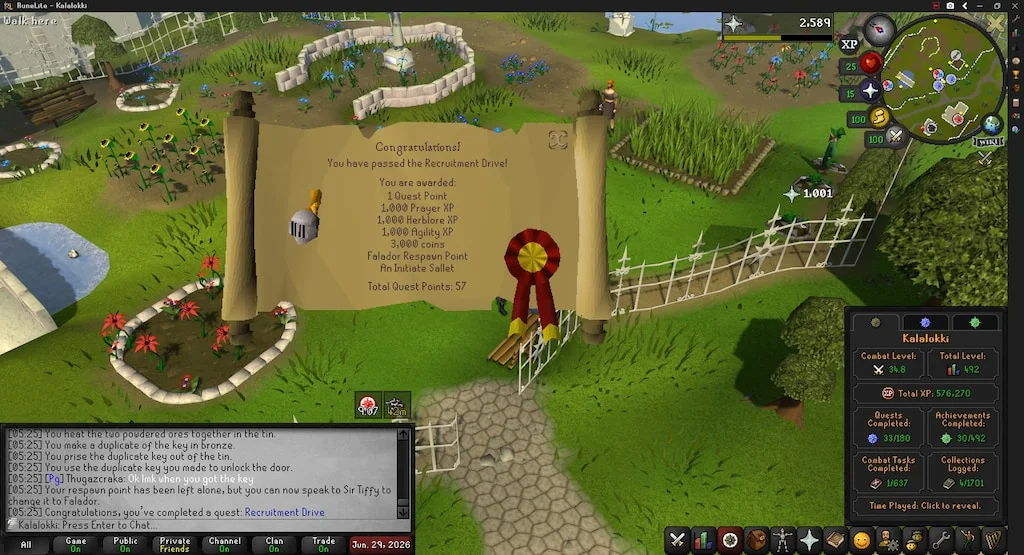
Progress is slow enough that milestones become memories. A new teleport, quest reward or equipment upgrade can change the routes used for years. Skills are not seasonal tracks discarded by an expansion reset; they are permanent capabilities attached to the account. That durability explains why repetitive training can remain satisfying even when the individual action is mechanically simple.
It also explains why efficiency culture is so powerful. The difference between a relaxed method and an optimized one can represent many hours, encouraging players to calculate experience rates and use community tools. Optimization is optional until comparison makes it feel mandatory. The healthiest approach is to decide which grinds deserve attention and which can remain pleasantly inefficient.
Risk makes the economy feel alive
Items move through a player-driven economy shaped by gathering, crafting, boss drops, consumption and loss. The Wilderness adds explicit danger, while death rules and account restrictions create consequences uncommon in safer theme-park worlds. Even players who avoid PvP participate in an economy influenced by those risks.
Ironman modes reinterpret that economy by restricting trade and requiring self-sufficiency. They turn familiar drops and low-level resources into meaningful achievements, but they also magnify every grind. New players should not choose Ironman solely because experienced creators make it look definitive. The standard economy is itself a deep system and offers more flexibility while learning.
The community does more than populate servers
Jagex’s polling system gives eligible players a formal role in many development decisions. This does not eliminate controversy or guarantee consensus, but it makes change unusually visible. New skills, raids and balance decisions arrive within a long negotiation about preserving the game’s identity.
Official mobile clients provide full cross-platform progression, allowing routine skilling to continue away from a desktop. Third-party client features and community knowledge can improve readability and planning, but they also widen the gap between the untouched interface and the way veterans actually play. Beginners should add tools gradually rather than turning the screen into someone else’s optimized dashboard.
MMOFinder verdict
Old School RuneScape is not preserved in amber. It is an actively developed MMO whose old constraints give new content a distinctive texture. The world trusts players to build goals, tolerate repetition and learn systems that are not constantly surfaced. In return, it offers progress that feels owned rather than rented from a season.
Choose OSRS if you enjoy the journey from ignorance to mastery and can find satisfaction in incremental gains. Avoid it if repetition feels empty unless the action itself is exciting. The game’s magic is not that every click is fun. It is that thousands of small clicks can become a personal history no other account shares.