
 ODIN: Valhalla Rising
ODIN: Valhalla Rising Makes Mythology a World Map
Seamless Norse realms, cross-platform play, boss raids, large battles, climbing, swimming, and class progression turn spectacle into a long shared journey.
The realms are built to feel continuous
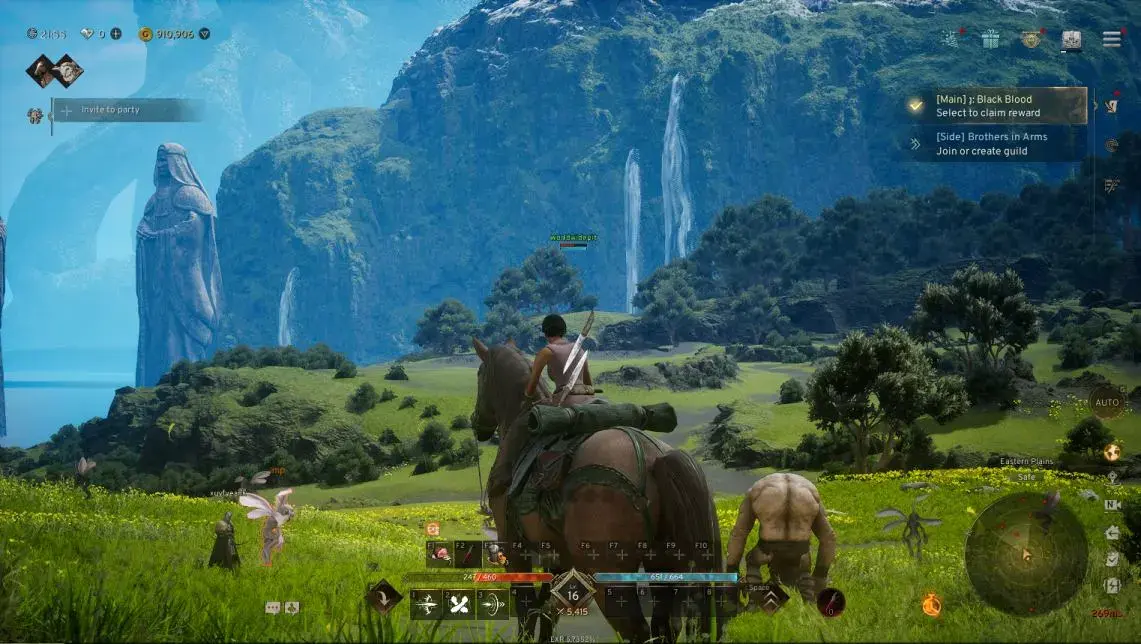
ODIN: Valhalla Rising presents Midgard, Jotunheim, Nidavellir, Alfheim, and Muspelheim as large mythic regions rather than a sequence of small combat rooms. Moving through them gives Norse mythology geographic scale.
Climbing and swimming add physical routes beyond following roads. The result is strongest when traversal invites a detour or makes a distant landmark feel reachable, not when automated movement reduces the landscape to time between objectives.
Spectacle supports a familiar progression engine
Unreal-powered environments, enormous creatures, and dramatic abilities give quests and boss fights immediate visual force. Classes establish clear combat identities, while gear and long-term advancement provide the continuing structure expected from a cross-platform MMORPG.
The presentation can make early progress feel generous, but the deeper question is how many overlapping upgrade systems a player wants to maintain. Visual clarity and mechanical simplicity are not the same thing.
Bosses turn scale into cooperation
Field encounters and raids use large enemies to gather players around a shared threat. Class roles, survival, and coordinated damage become more meaningful when a creature occupies space that no single hero can control.
Large-scale battles extend that social pressure into competition. The experience depends on server activity and organization, since spectacle without enough participants becomes a schedule rather than an event.
Cross-play changes when the world is available
PC and mobile access lets the same persistent character fit different routines. A long session can happen at a desk while maintenance, social contact, or shorter objectives remain available elsewhere.
That convenience also brings a mobile-shaped interface and monetization structure. ODIN works best for players who value a large, visually rich shared world and can approach its progression systems with clear limits.