
 La Tale
La Tale Makes Side-Scrolling Progression Feel Joyfully Excessive
Platforming combat, branching jobs, collections, fashion, pets, and enormous growth systems keep a cheerful 2D journey expanding long after its first continent.
Movement gives the world a different grammar
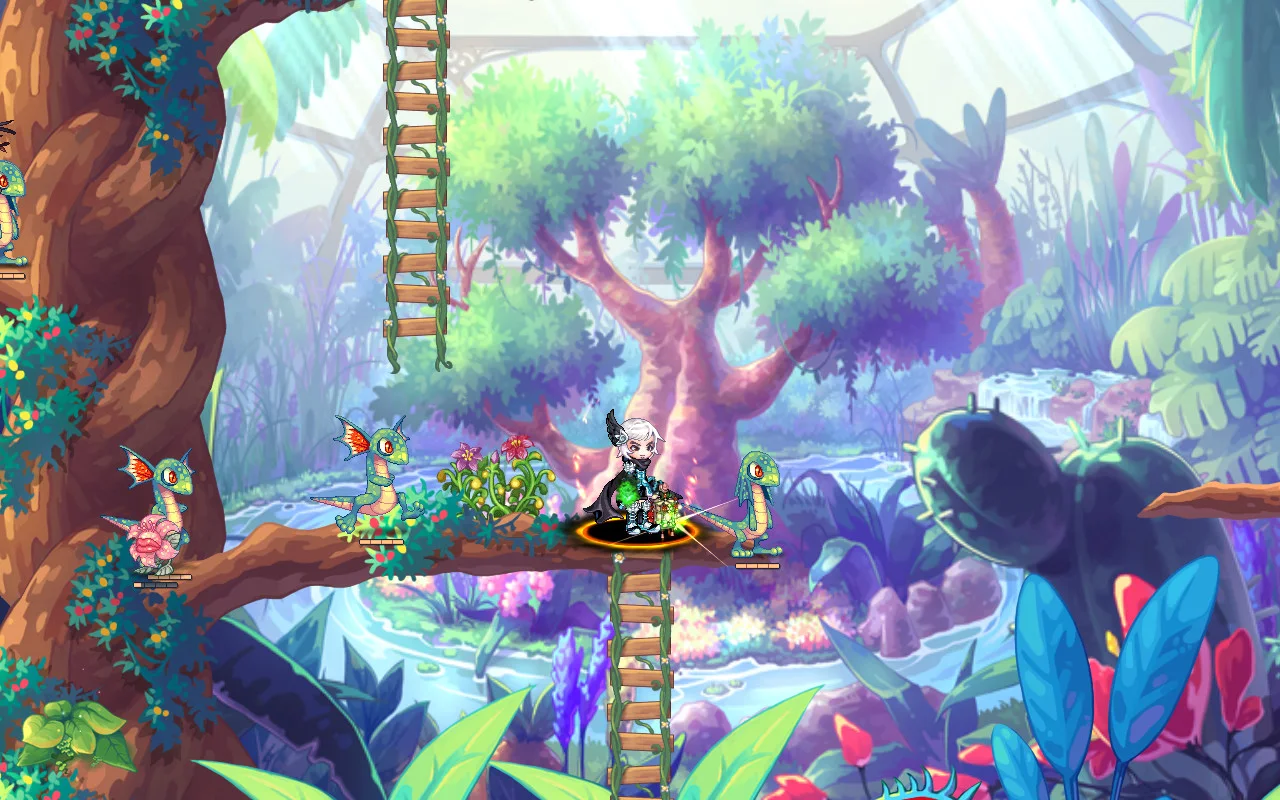
La Tale is read from the side, so ladders, platforms, vertical rooms, and enemy placement shape exploration differently from an overhead or behind-the-character MMO. Crossing a field has the bounce and timing of a platform game even when the underlying goal is familiar character progression.
The perspective also makes cities and monsters feel like illustrated stages. Animation and color communicate personality quickly, allowing the game to remain inviting even as its menus and statistics become increasingly dense. Its cheerfulness is structural, not merely decorative.
Classes keep unfolding instead of settling
Base classes branch into job specialties, later advancements, subclasses, and awakening systems. A character is repeatedly reinterpreted rather than simply given a stronger version of the same opening kit. New movement and attack patterns make growth visible on screen.
This abundance is exciting for players who love long ladders, but class research becomes almost unavoidable. The distance between a fresh character and established progression can be intimidating, and a seemingly small early choice may determine hundreds of hours of animation and equipment preference.
Collection is another form of self-portrait
Outfits, titles, pets, emotes, weapons, and enchantments give players many overlapping reasons to revisit content. Some collections improve power while others communicate taste. Because characters remain clearly visible in two dimensions, a distinctive look carries unusual presence.
The same volume can make rewards difficult to evaluate. Inventory and upgrade layers demand attention, and not every collectible is equally meaningful. La Tale works best when players choose personal themes instead of treating every available checklist as an obligation.
Old structure survives through continued expansion
Guilds, personal shops, crafting, bosses, dungeons, story episodes, and seasonal events have accumulated into a broad endgame. The game’s longevity means there is always another system, but also that onboarding must explain conventions developed across many eras.
Players who accept that archaeological quality can find a rare kind of comfort: a colorful world still adding chapters without discarding its side-scrolling identity. La Tale endures because it never mistakes age for a reason to become visually cynical.