
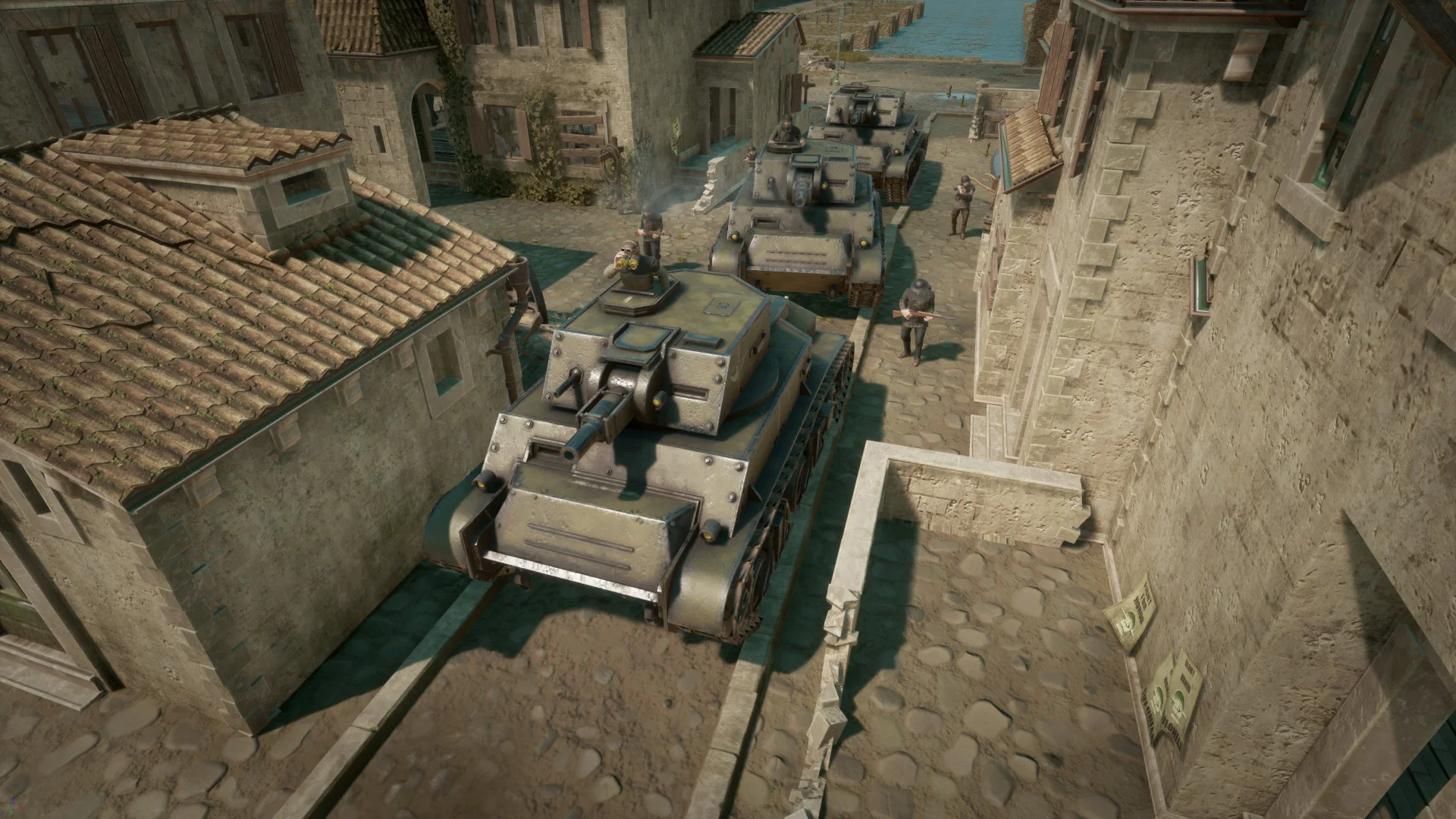
 Foxhole
Foxhole Makes Every Rifle Depend on Someone Else's Work
Foxhole connects frontline combat to player-run logistics, manufacturing, construction, artillery, intelligence, and persistent territorial warfare where small jobs support an enormous shared campaign.
The supply chain is the real progression system
Weapons, ammunition, vehicles, fuel, medical supplies, and building materials reach the front because players gather, manufacture, load, and transport them. A soldier's exciting moment may depend on another player's quiet hour behind the lines.
This connection gives ordinary objects unusual weight. Losing a truck or wasting shells is not just a personal setback; it consumes labor performed by people the frontline fighter may never meet.
No single player owns the war
Campaign territory belongs to factions, and thousands of local decisions accumulate into advances, collapses, and defensive lines. Individual players can influence a battle without becoming the chosen hero of the larger conflict.
That humility is powerful but demanding. Progress can disappear while a player is offline, and a carefully planned operation may become irrelevant when the wider front changes direction.
Construction turns geography into strategy
Trenches, bunkers, storage, intelligence structures, and artillery positions let players reshape how a region functions. Good defenses organize movement and supply as much as they stop bullets.
Building consumes time and materials, while poorly placed structures can obstruct allies. The system rewards crews who understand terrain, maintenance, and the needs of an entire front rather than builders pursuing isolated monuments.
Communication converts labor into purpose
Map information, voice chat, regiments, and improvised leadership help strangers decide where supplies and bodies are needed. Even a simple delivery becomes satisfying when its effect is visible to the people holding a threatened position.
Without that context, tasks can feel repetitive or anonymous. Foxhole is at its best when players ask what the war needs, find a group, and accept that collective success is the closest thing the game offers to a personal endgame.