
 Fortnite
Fortnite Is No Longer One Game, and Discovery Is the Real Lobby
Fortnite connects Battle Royale, Zero Build, survival, social spaces, music, racing, and creator-made islands through one identity, one social graph, and one crowded discovery surface.
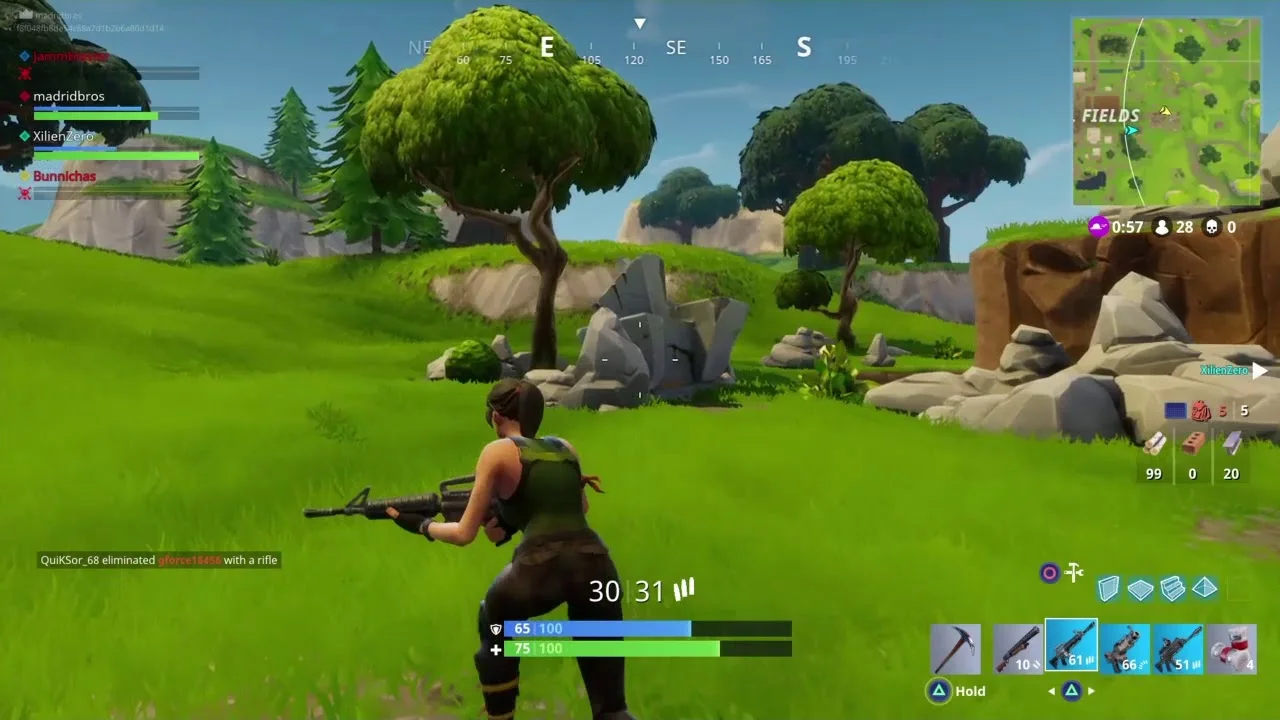
Battle Royale remains the common language
Fortnite's shooting, movement, readable items, and shrinking battlefield provide a familiar meeting point even as the platform expands. Building adds a uniquely expressive layer, while Zero Build preserves the same spatial contest for players who prefer direct movement and aim.
The mode succeeds because each match compresses scavenging, improvisation, risk, and spectacle into a clear arc. Constant variation matters, but the durable pleasure is adapting a simple plan after an inconvenient landing or unexpected encounter.
The account now matters more than the mode
A shared locker, friends list, party, and identity connect experiences that otherwise resemble separate games. Players can move from competitive action to a social or cooperative island without leaving the surrounding ecosystem.
This continuity changes what Fortnite means. It is less a single ruleset than a place where a group decides what to do together. The strength is convenience; the weakness is that no individual mode can completely define the expectations of everyone arriving through the same door.
Creation turns players into an audience
Creative tools and Unreal Editor for Fortnite allow outside developers to publish action, survival, roleplaying, horror, and experimental experiences. The result is a catalog whose range would be impossible for one internal team to produce.
A large catalog makes curation part of play. Thumbnails, recommendations, trends, and search decide which islands receive attention, while players must learn to distinguish enduring communities from disposable novelty. Discovery is therefore both Fortnite's engine and its central frustration.
Constant change rewards flexibility
Fortnite treats reinvention as a permanent feature. Weapons, maps, collaborations, interfaces, and entire genres can appear or recede, ensuring that returning players usually have something unfamiliar to inspect.
That momentum can weaken attachment to a favorite version. Players who enjoy the platform most accept that mastery and availability are temporary, then use the stable social layer to carry friendships between experiences. The real progression is learning how to find fun inside change.