
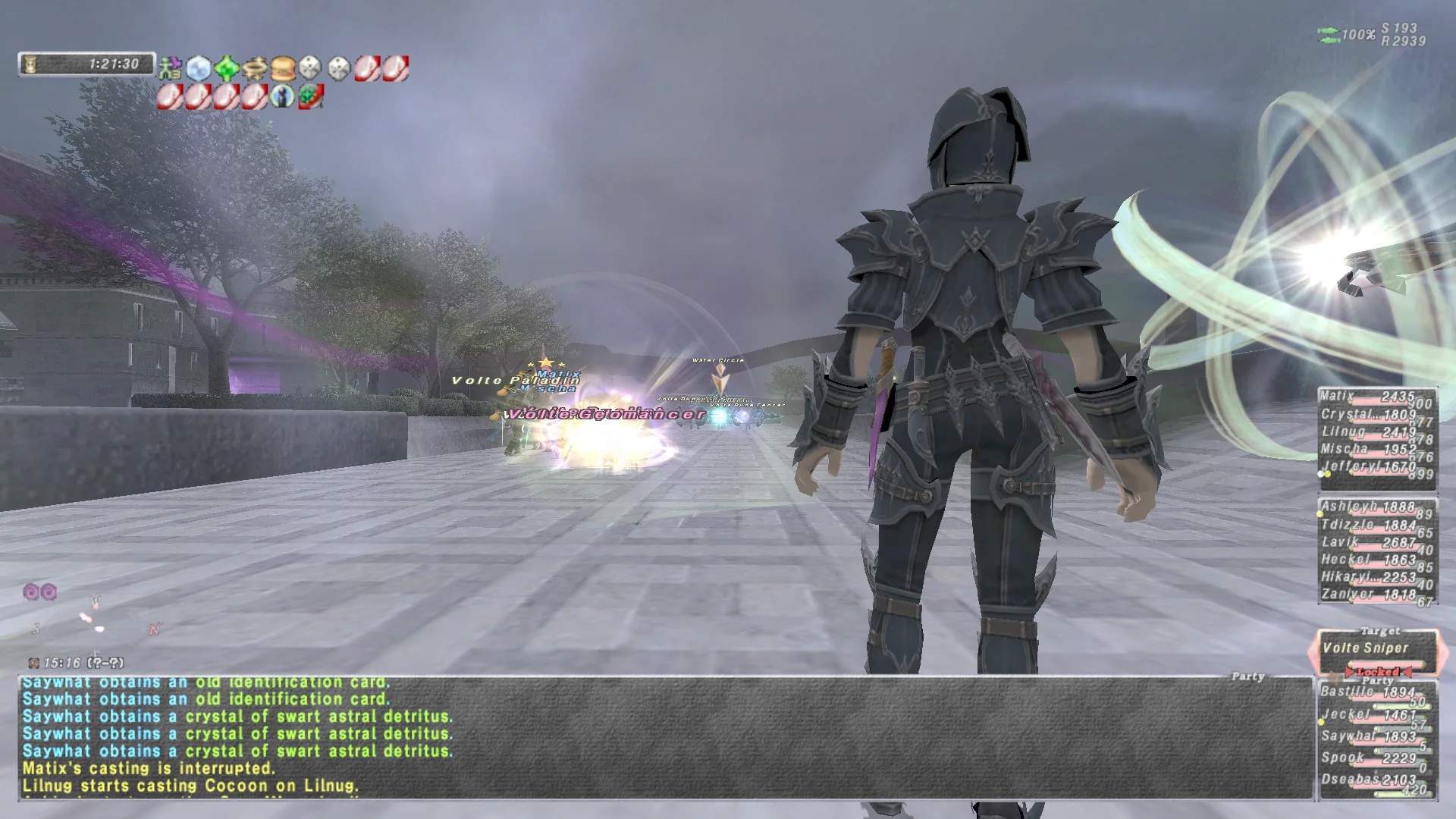
 Final Fantasy XI
Final Fantasy XI: a grand adventure built from preparation, trust and patient discovery
Vana’diel asks players to learn its language, plan their journeys and grow through many jobs on one character—a demanding RPG whose world still feels larger than its interface.
Vana’diel feels like a place with its own grammar
Final Fantasy XI does not hurry to translate itself into modern MMO habits. Travel, mission prerequisites, reputation, item acquisition and battlefield rules form a dense local language. At first, even simple goals can require more research than expected. Over time, that knowledge changes the scale of the world: routes become familiar, cities gain function and remote zones become part of a personal map.
The friction is substantial, but it supports a powerful sense of journey. Vana’diel is not presented as scenery between queue screens. Nations, alliances and recurring characters connect stories across regions, while ordinary travel establishes distance. The game’s strongest moments often begin before the battle, when the player works out how to reach it and what must be prepared.
One character can become a library of jobs
A single character can unlock and level many jobs, encouraging experimentation without abandoning identity. Jobs have distinct roles, ability rhythms and equipment priorities, and support-job combinations add another layer of expression. Changing jobs can reframe familiar content and give old rewards a new purpose.
That freedom creates an equipment problem as much as a leveling opportunity. Serious play often involves multiple gear sets that optimize different abilities or phases of combat. Players who love preparation can treat inventory and macros as part of mastery. Players who want one clean loadout may find the administrative burden disproportionate.
Trust companions changed solitude without erasing the world
The Trust system allows adventurers to summon alter egos that fill tank, healing, damage and support roles. This makes leveling and many missions practical without assembling a traditional party for every step. Completing story progression expands how many companions can be called, so the system grows alongside the journey.
Trusts do not turn the game into a conventional solo RPG. Their behavior has limits, some encounters restrict them, and advanced goals still benefit from human coordination. What they provide is continuity: a player can keep moving through the world during quiet hours and learn the shape of an encounter before seeking help.
Combat lives in timing and preparation
At a glance, auto-attacks and menus can appear passive. The depth emerges through weapon skills, skillchains, magic bursts, buffs, debuffs, positioning and equipment changes. A coordinated sequence can produce far more than isolated button presses, and job roles often depend on reading the party’s plan rather than following a fixed personal rotation.
This rhythm is measured rather than flashy. It rewards players who enjoy building an answer before the fight and executing it with discipline. The tradeoff is immediacy: early combat does not showcase the full system, and the game is poor at demonstrating why later coordination becomes satisfying.
The story is broad, but the route through it needs a map
Vana’diel contains national missions, expansion narratives and interconnected quest lines with a distinctive Final Fantasy tone. Stories are not simply an excuse for endgame access; they are a central reason to play. Rhapsodies provides a useful connective spine and grants practical benefits that improve leveling and Trust use.
The challenge is sequencing. Requirements cross older systems, some instructions are intentionally sparse, and several attractive goals compete for attention. A returning-adventurer guide or community reference is not optional convenience for most people; it is the compass that lets the game’s enormous archive become an adventure instead of a tangle.
MMOFinder verdict
Final Fantasy XI remains special because it asks the player to meet Vana’diel on its own terms. Its stories, jobs and combat systems reward commitment, while Trusts provide a workable bridge through content that once depended on constant grouping.
Choose it if preparation, discovery and slow-earned familiarity sound meaningful. Avoid it if interface friction or reference-heavy progression breaks immersion. Beneath that difficult surface is one of the genre’s most coherent worlds and one of Final Fantasy’s most ambitious journeys.