
 Enlisted
Enlisted Makes One Player Responsible for an Entire Squad
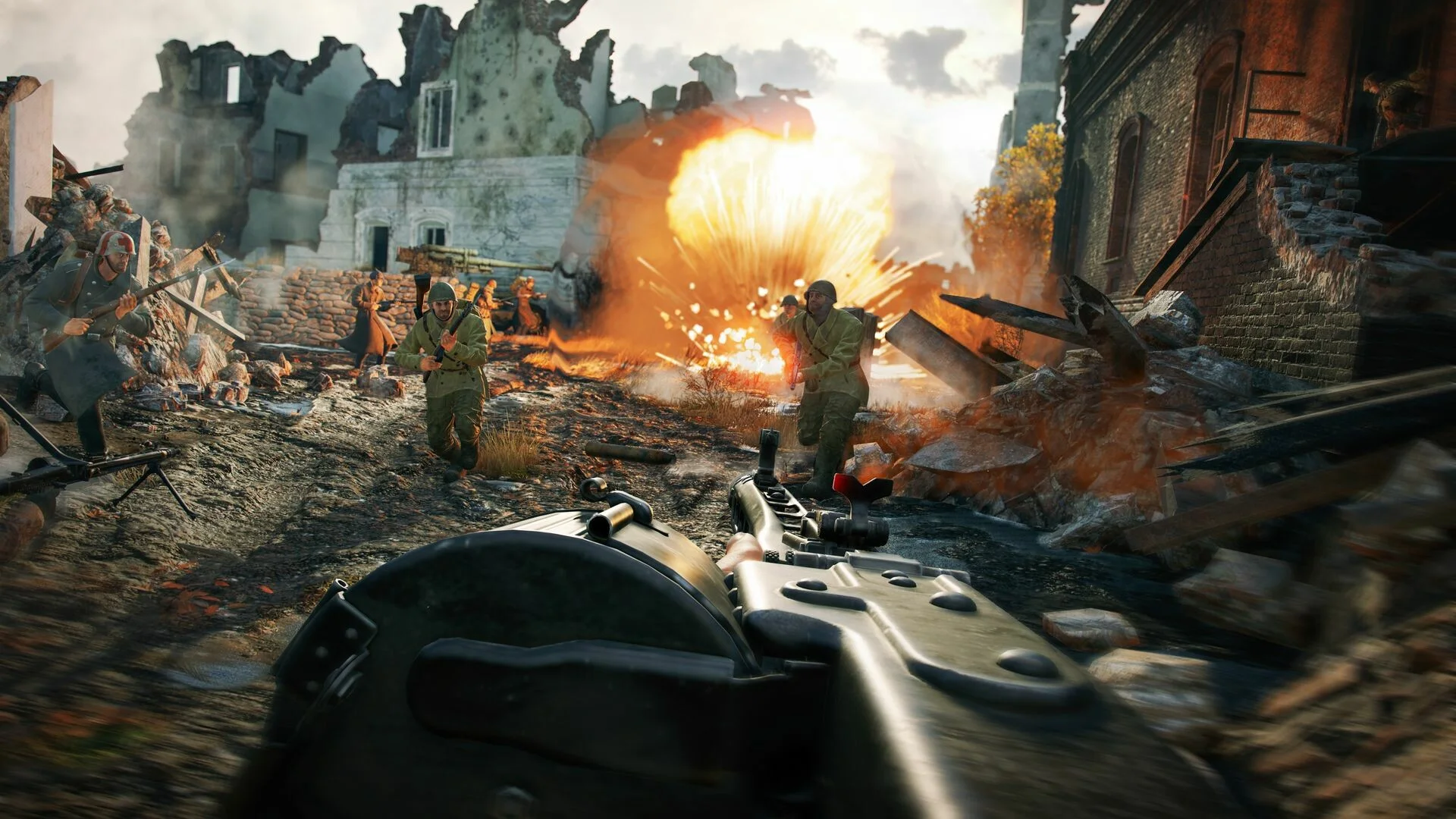
Enlisted surrounds direct first-person combat with AI squad command, soldier equipment, vehicles, fortifications, and rapid role switching across large battlefields.
A life is expendable but the squad is not
The player directly controls one soldier while AI companions follow orders, hold positions, and provide extra lives within the same deployment. Switching after a casualty keeps the player near the action and changes death from a full reset into a tactical loss.
This structure encourages responsibility at two scales. Good shooting wins immediate encounters, but useful orders and sensible squad placement preserve options. A reckless commander can waste several soldiers even while performing well with the first.
Roles can change before the firefight ends
A surviving squad may contain engineers, medics, anti-tank specialists, radio operators, or other soldiers with distinct tools. Switching between them lets one player answer a vehicle, build a rally point, support an assault, or continue ordinary infantry combat.
The flexibility makes battlefield awareness more valuable than devotion to a single class. Players who notice what an objective lacks can contribute immediately, while those who treat every soldier as the same rifle risk ignoring the system that makes Enlisted distinctive.
AI creates scale and awkwardness together
Computer-controlled squadmates fill streets and trenches with bodies, making battles feel larger than the number of human commanders alone would suggest. They also expose the limitations of pathfinding, cover choice, and self-preservation in complicated spaces.
Learning to protect and position the squad is therefore part tactics and part accommodation. The AI is most useful when given simple, deliberate tasks. Expecting independent brilliance usually produces frustration, but treating companions as a movable reserve creates real leverage.
The armory is a strategy game of its own
Soldiers, squads, weapons, perks, vehicles, and presets give players extensive control over what enters battle. Building an army can be absorbing because equipment decisions alter both individual capability and the roles available after a casualty.
The same depth makes progression difficult to read. Advancement across nations and battle ratings can become a larger project than learning maps. Enlisted works best when players develop a few coherent lineups instead of measuring every session by the size of the remaining research tree.