
 Dark Age of Camelot
Dark Age of Camelot Makes Realm War Bigger Than Any Guild
Three asymmetric realms, persistent frontiers, keeps, relics, siege engines, and realm abilities make conflict feel like a public campaign rather than a match.
Three realms prevent war from becoming a straight line
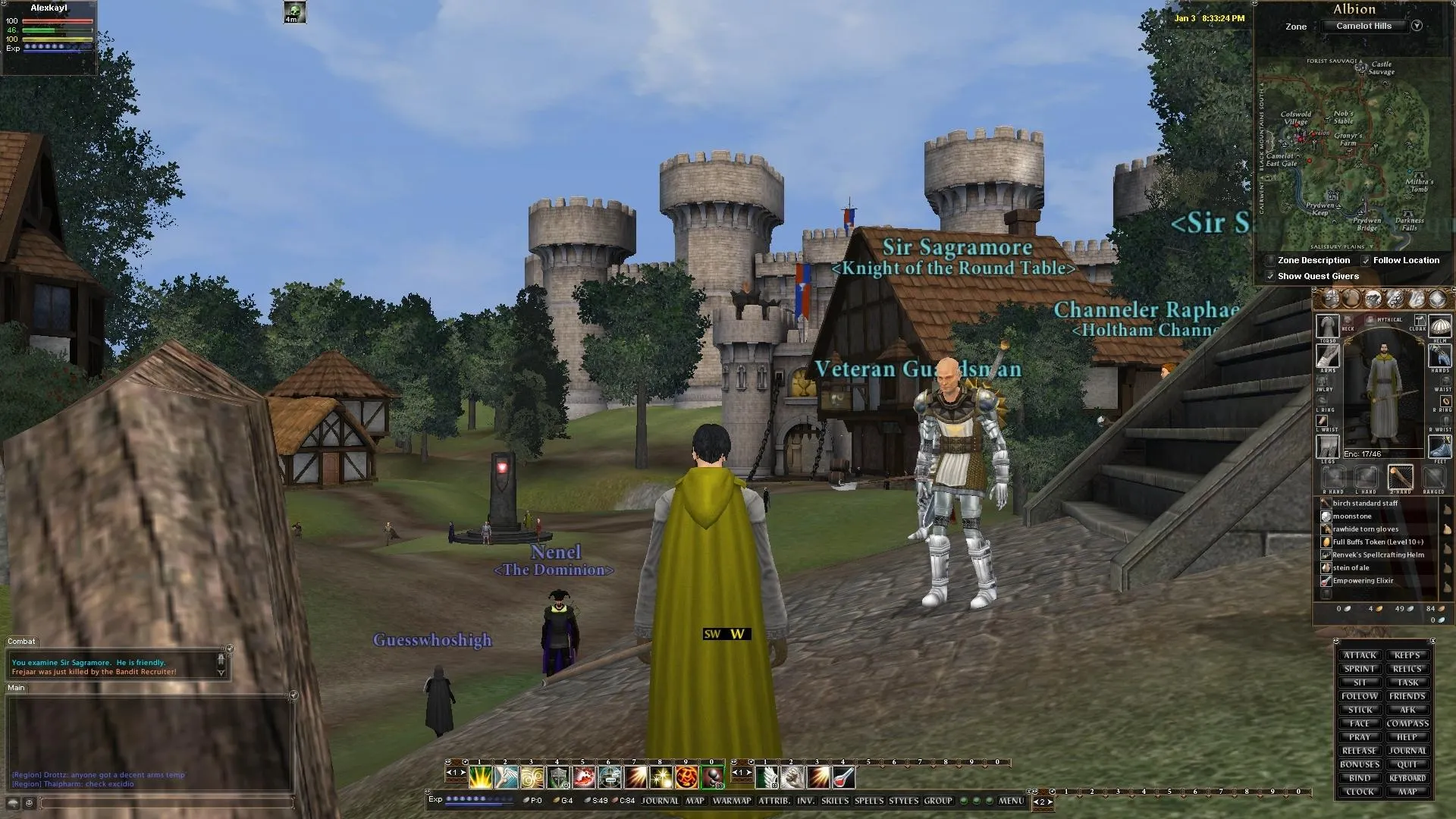
Albion, Midgard, and Hibernia create a political geometry that two-sided conflict cannot reproduce. A stronger realm can attract attacks from both rivals, a siege can be interrupted by a third force, and temporary pressure can shift without requiring a formal alliance. The frontier remains unstable.
Each realm also carries its own mythology, races, and class arrangements. The opposition is not simply the same roster in another color. Learning enemy capabilities becomes part of learning the world, while loyalty grows from inhabiting one side of an asymmetric conflict.
Keeps turn geography into a campaign
Frontier keeps and towers can be attacked, defended, claimed, and used to shape movement. Siege engines give groups practical jobs beyond direct player combat, while the realm war map makes control visible. A battle changes the conditions for whatever happens next.
Because territory affects routes and opportunities, success is more than a tally of defeated opponents. Scouts, defenders, siege operators, and leaders contribute to an operation whose result persists after the immediate fight. The map remembers organization.
Relics make victory belong to everyone
Relics provide benefits and prestige to the realm that controls them, transforming a dangerous raid into a public objective. The carrier, escort, defenders, and intercepting enemies all participate in a story with consequences for people who were not present at the decisive moment.
This shared reward strengthens realm identity. It can also make population imbalance painful, since collective strength influences access and bonuses. The three-realm structure helps create counterpressure, but community leadership remains essential to turning numbers into effective action.
Class mastery has a social destination
Realm abilities and specialized classes reward long-term competitive experience. A player's value often depends on positioning, interruption, support, crowd control, and communication rather than only damage. Balanced groups need people who understand a narrow responsibility under chaotic conditions.
The learning curve is intimidating because veterans speak a language built over years of encounters. Newcomers benefit from joining a realm community willing to teach templates and battlefield habits. Once that support exists, Dark Age of Camelot reveals its enduring achievement: making personal mastery feel useful to an army.