
 Camelot Unchained
Camelot Unchained Builds an MMO Around the Front Line
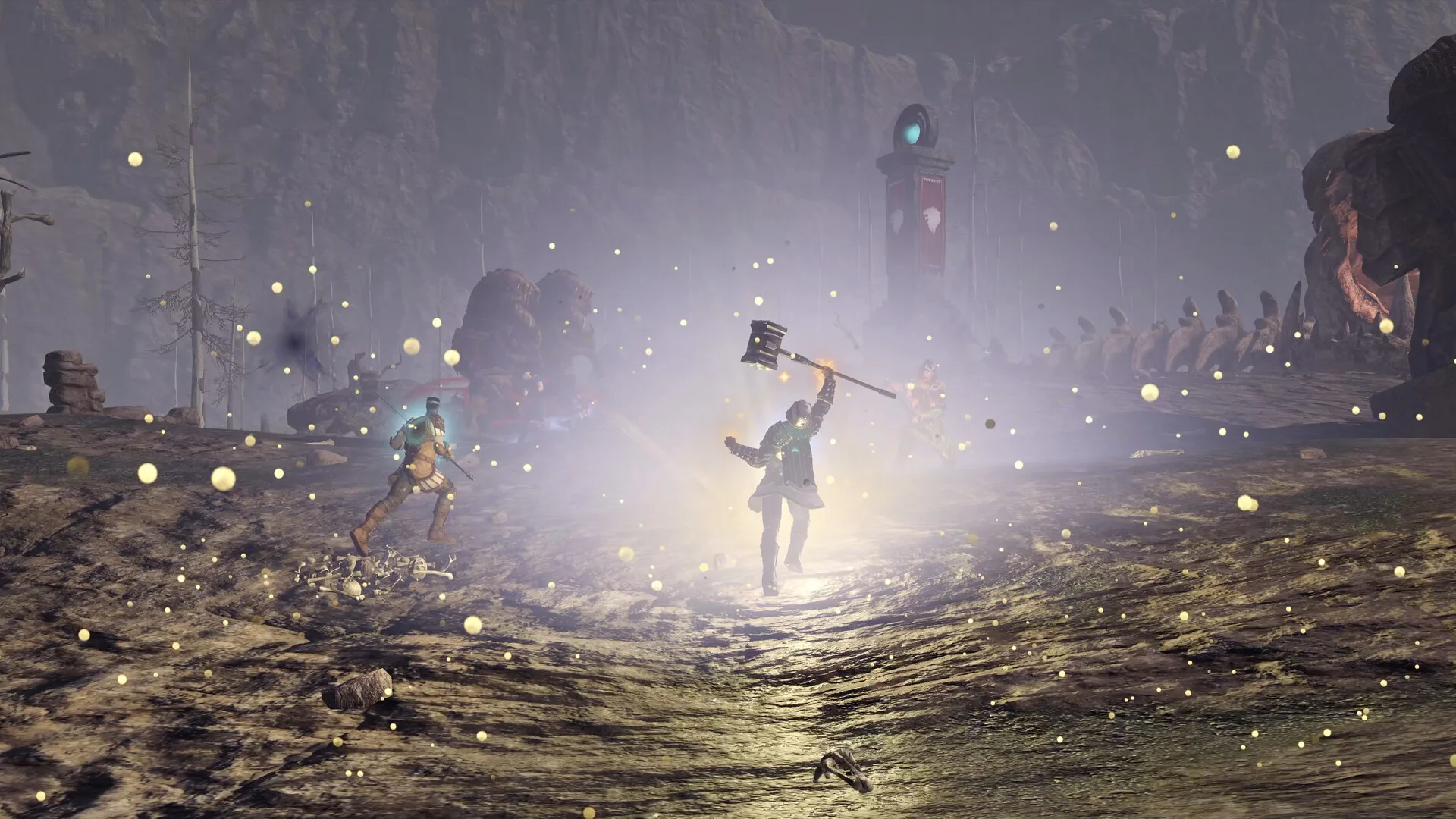
Three realms, player-built defenses, and specialized combat roles make war the organizing principle of the world rather than an activity selected from an endgame menu.
Realm identity comes before personal convenience
Camelot Unchained is built around three competing realms whose conflict gives classes, resources, fortifications, and territory a shared purpose. The realm is not a temporary team color. It is the community whose successes and failures frame a character’s long-term place in the game.
That structure can create loyalty beyond a guild. Scouts, crafters, builders, siege crews, and frontline fighters all affect the same campaign from different angles. A useful player is not always the one at the top of a damage chart.
Large battles need legible responsibilities
Hundreds of abilities and divergent class paths offer room for specialization, but scale only works when players can understand what needs doing. Holding a choke point, supplying equipment, repairing a structure, or disrupting an enemy formation gives a battle shape that persists beyond individual duels.
The appeal is strategic friction. Travel, terrain, preparation, and coordination matter because the game is not designed to teleport every participant into an equal arena. Victory should feel assembled by a realm rather than awarded by matchmaking.
Crafting belongs inside the war machine
A realm-war MMO needs an economy that does more than decorate combat rewards. When equipment and defenses depend on players, production becomes another front. Gatherers and crafters convert territorial access into military capacity, giving noncombat work visible consequences.
That dependency will not suit everyone. Players who prefer self-contained advancement may resent needing a broader organization, while dedicated artisans may find their work exposed to balance changes and wartime demand. The design assumes that dependence is a feature.
Early Access is an invitation with conditions
Camelot Unchained reached Early Access after an unusually long and scrutinized development. The playable build is a milestone, not the end of that history. Population, stability, content breadth, and system tuning will determine whether its battlefield can sustain the social scale promised by its design.
The fairest way to approach it is as a focused war project still proving itself. Players attracted by realm loyalty may find an MMO built specifically for them, but anyone expecting a finished theme-park journey should wait until the campaign has matured.