
 Broken Ranks
Broken Ranks Turns Ten Seconds Into a Full Tactical Argument
Simultaneous turns, action-point allocation, attack zones, defenses, seven classes, parties, guilds, bosses, and a harsh low-fantasy story reward fast collective judgment.
The turn is planned under pressure
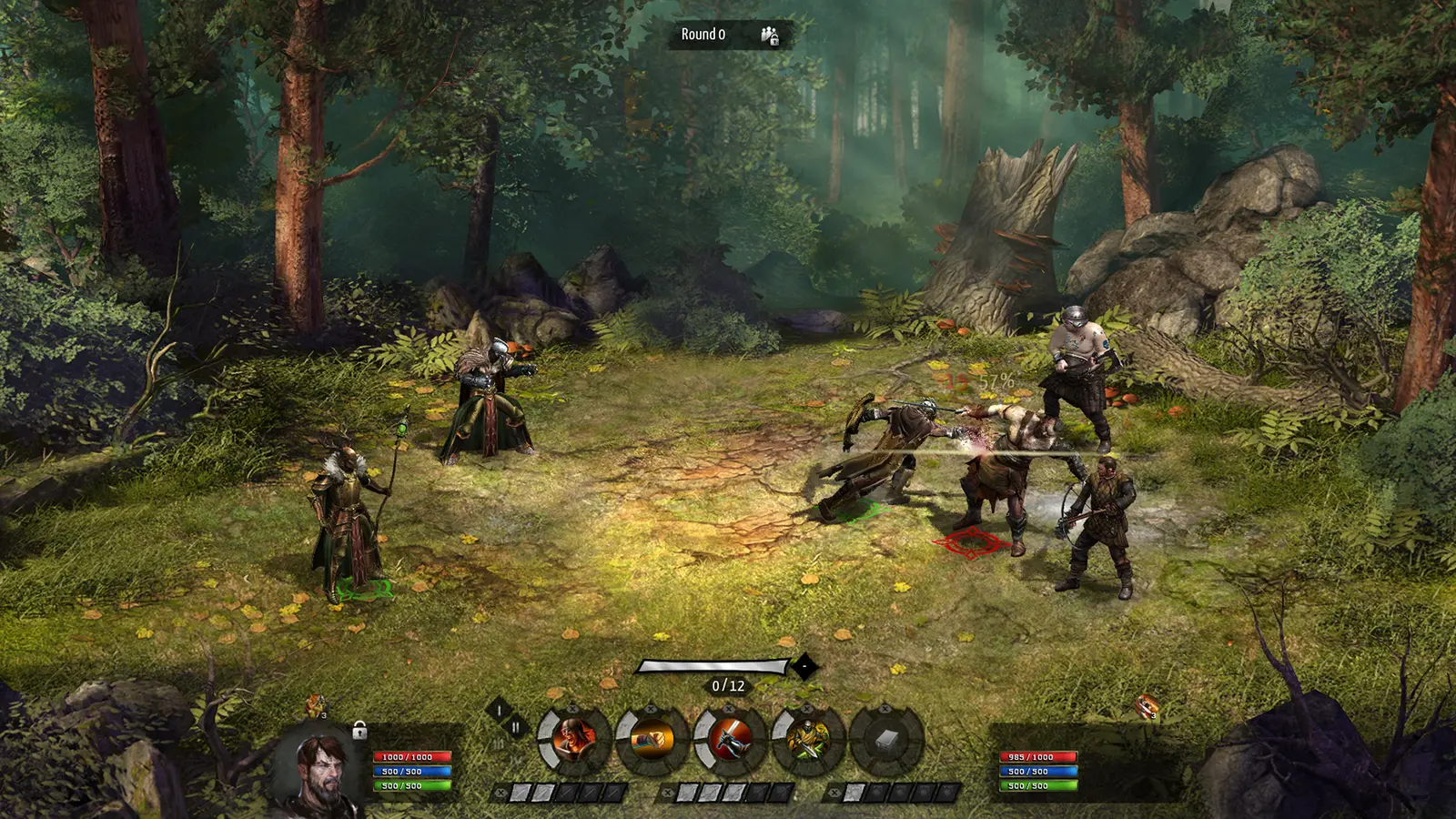
Broken Ranks gives combatants a short window to choose abilities and distribute action points among attacks and defenses. Everyone commits before the round resolves, so planning is simultaneous rather than a leisurely sequence of isolated decisions.
The timer prevents turn-based combat from becoming detached calculation. Players must recognize the likely threat, communicate priorities, and accept that an imperfect shared decision made in time is better than a perfect plan entered too late.
Attack zones make defense an active choice
Melee, ranged, and mental attacks interact with different defenses, priorities, resistances, and class tools. Spending more action points can improve the chance that an action succeeds, but every defensive commitment reduces what remains for aggression.
This creates readable uncertainty. A player is not only asking which skill deals the most damage; they are predicting where pressure will arrive and deciding how much of the round can be risked.
Seven classes speak different tactical languages
Fire Mages, Voodoos, Druids, Barbarians, Knights, Archers, and Sheeds bring damage, healing, protection, control, and weakening effects from distinct angles. Difficult groups work because roles interact, not because every class is a variation of the same rotation.
Class identity can therefore feel restrictive to a solo-minded optimizer. The reward appears in coordinated battles where one player creates an opening, another protects it, and a third converts it into momentum.
The world supports the combat mood
Hand-painted isometric locations and a story about displacement, loss, and survival give the game a rougher tone than cheerful progression fantasy. Exploration feels closer to a classic computer RPG that happens to contain other people.
That presentation will not suit everyone, but it makes the tactical system coherent. Broken Ranks is not trying to hide complexity behind spectacle; it wants each encounter to feel like a difficult conversation with a hostile world.