
 ArcheAge
ArcheAge: a brilliant sandbox whose freedom always came with somebody else's price
Trade packs, farms, ships, piracy and territorial conflict created stories that no quest writer could schedule, even as progression and monetization strained the world around them.
Trade made geography matter
ArcheAge treated distance as an economic variable. Producing a trade pack was only the beginning; value depended on carrying it through a world where roads, coastlines and hostile players could change the outcome.
That journey gave ordinary movement purpose. A cart convoy or merchant ship became a public event because cargo represented invested time, and every observer understood that the route could turn into an opportunity or an ambush.
The sea was a genuine game space
Ships were crafted, equipped and crewed rather than summoned as decorative mounts. Wind, harpoons, cargo storage and naval weapons made the ocean a place for logistics, hunting and escape.
The best stories emerged between systems: a routine delivery became a chase, a fishing trip attracted pirates, or a guild mobilized to recover stolen goods. Few fantasy MMOs have made water feel so connected to their economy.
Property created attachment and exclusion
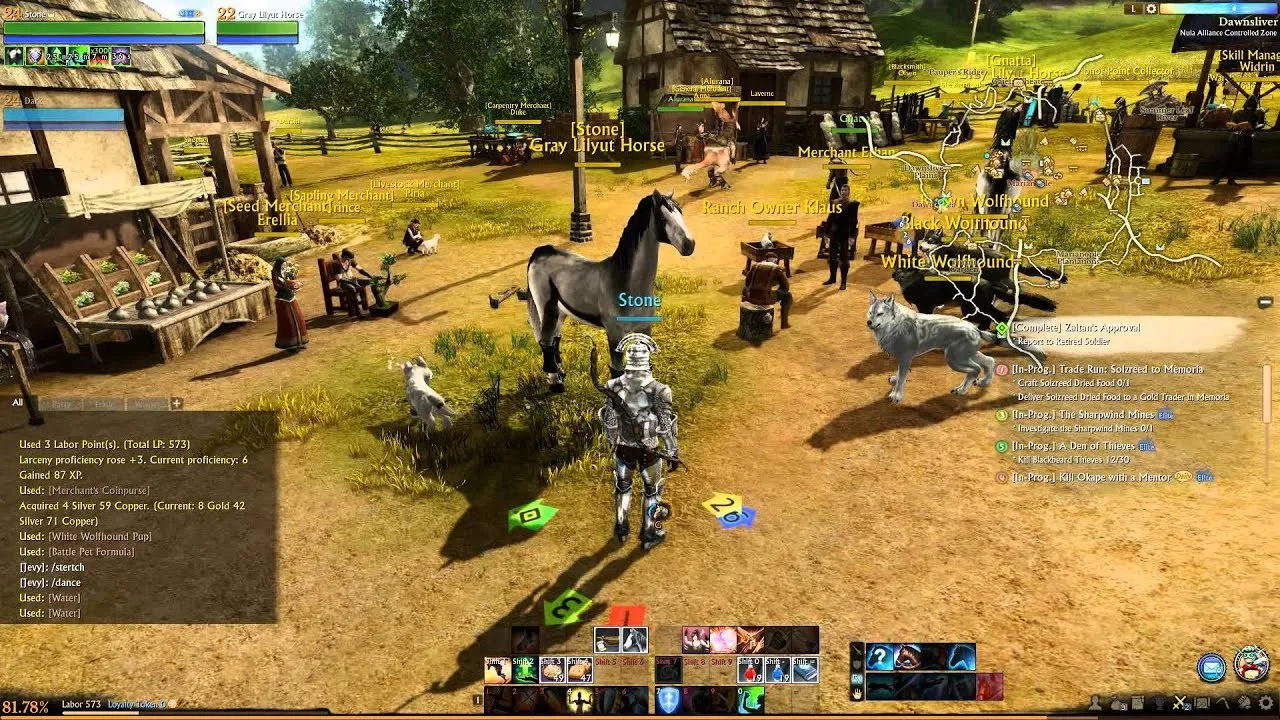
Farms and houses gave players a visible stake in the landscape. Crops, animals, crafting stations and neighborhood locations turned a plot into both a practical workshop and a personal project.
Scarcity supplied that attachment with a shadow. Prime land concentrated around players who arrived early or organized efficiently, while others encountered crowded zones and expensive access. A meaningful property system also became a powerful gatekeeper.
The caution is part of the legacy
Labor limits and monetization touched gathering, crafting and progression—the same activities that powered the sandbox. When access to those systems felt unequal, economic competition stopped feeling like a contest played under common rules.
ArcheAge is therefore both inspiration and warning. It proved that trade, property, sailing and conflict can create a living fantasy world, while showing how quickly external pressure can weaken the trust such a world requires.